
Over the years the Society has actively encouraged efforts to regenerate the town centre as can be seen throughout our website, but there have been three particular sites that have been of concern for many years. Johnson Hospital, The Bull & Monkie and the Old Royal Mail Sorting Office. These are all in prime locations in the Spalding Conservation Area and we are of the view that any development on these sites need to be right for the sites themselves and the surrounding Conservation area.
Johnson Hospital
The Johnson Hospital was funded by sisters Elizabeth Ann Johnson (died 28 January 1872) and Mary Ann Johnson (died 16 March 1878) of Fairfax (later Holyrood) House, Cowbit Road, Spalding, with Elizabeth initially leaving a substantial part of her estate in her Will for a Hospital and lnfirmary to be built in Spalding “for the benefit of that town and the surrounding villages.” Following the death of her sister Mary in 1878, plans were put into place to build the Hospital, which was opened to the public on Wednesday 12 October 1881.
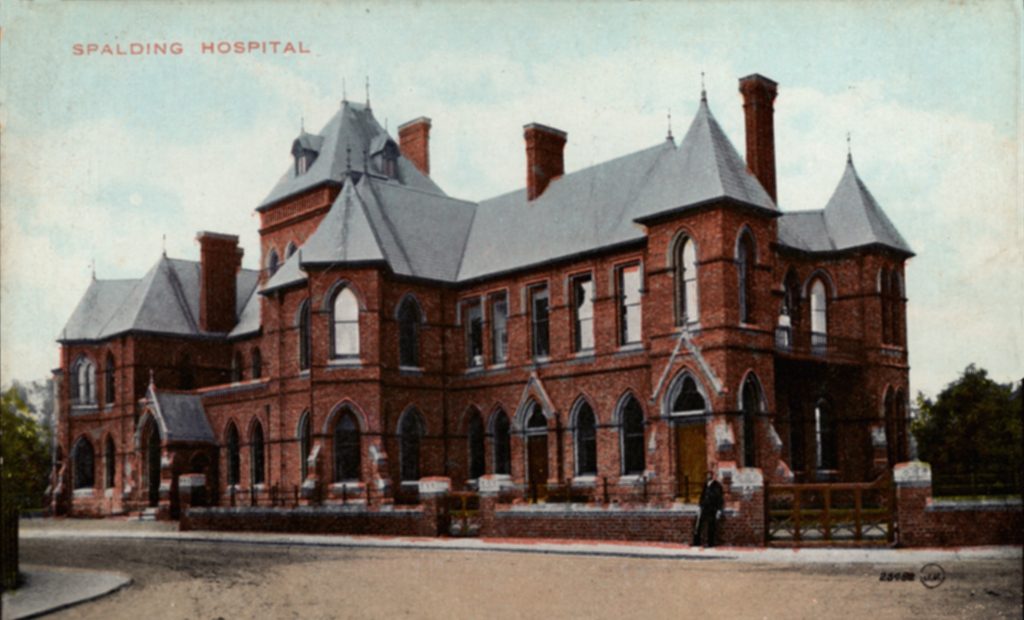
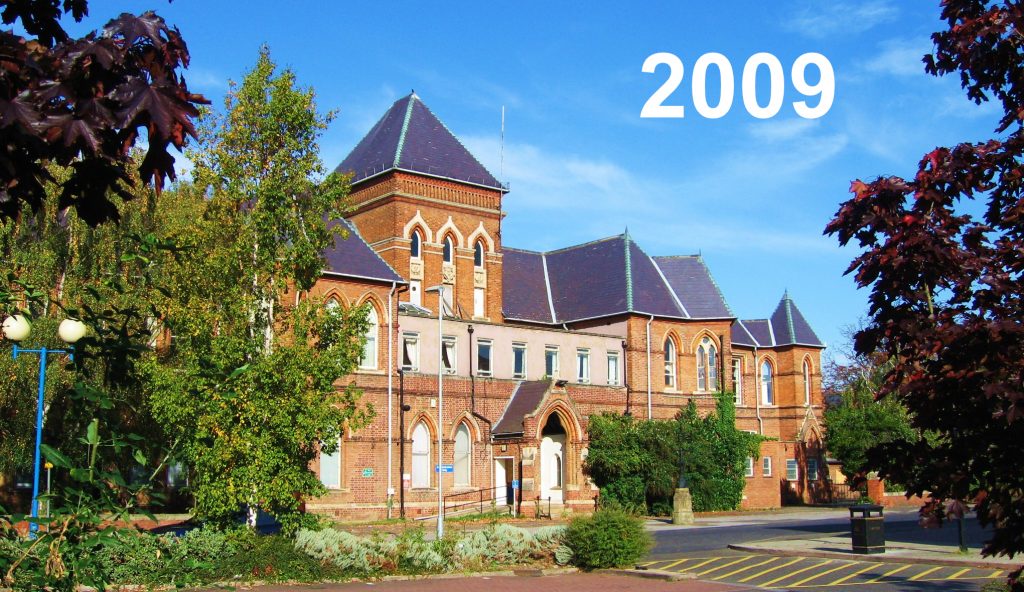
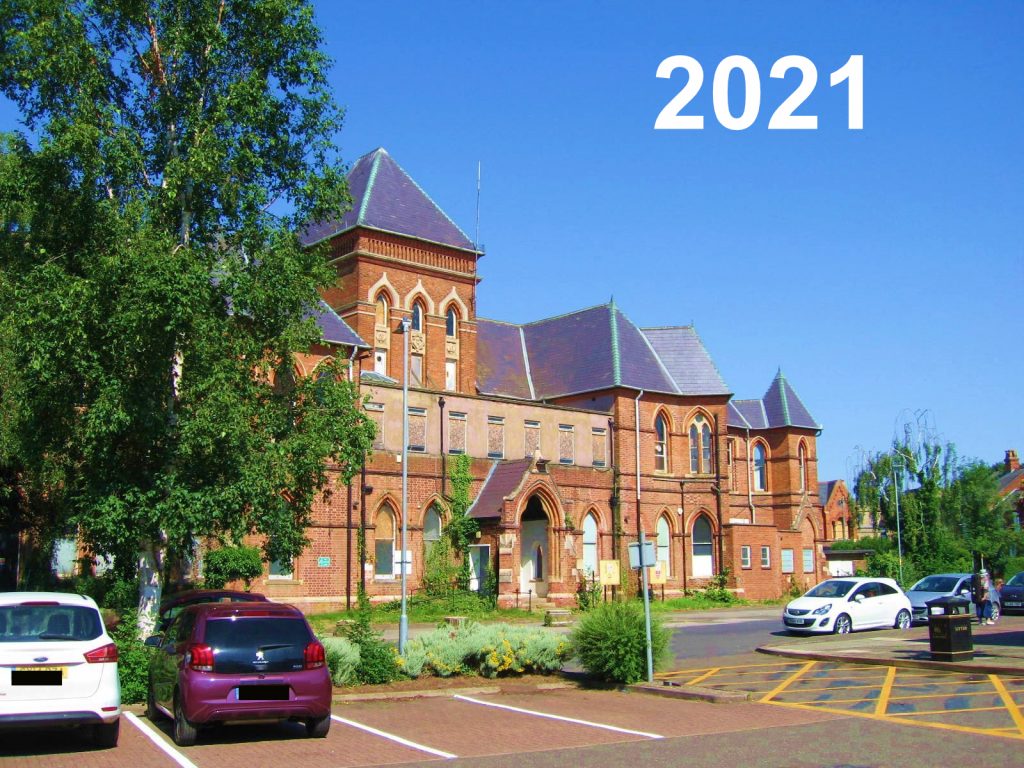
Over the years, various enhancements were made, including nurses’ quarters, out-patients department, and an orthopaedic block (the last financed largely by local fund-raising efforts). Eventually, the building became unsuitable for the needs of modern day healthcare and the new Johnson Community Hospital was built on Spalding Road, Pinchbeck, in 2009. The old building was put up for sale by the NHS and it was purchased for £180,000 by Dyden Ltd, an offshore company registered in The British Virgin Islands.
They have not done anything with it since.
As the building deteriorated we highlighted the decline in our June 2014 and October 2017 newsletters and also tried to get the building listed. Others have also tried. The main reason that attempts have failed is due to the addition on the front on the building.
Bull & Monkie
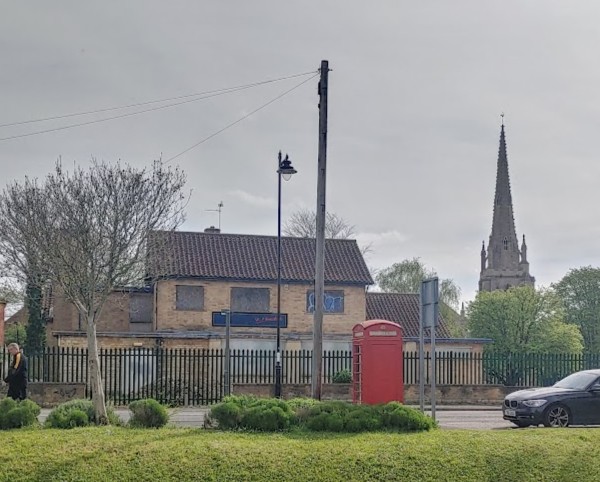
The Bull & Monkie was sold to Crispen Holdings Ltd, an offshore company registered in the British Virgin Islands on 1 August 2008 for £650,000. Since then, they have done little to maintain the site, unless forced to by South Holland District Council. Unlike the Johnson Hospital, there have been various proposals put forward for the site, but all of them bar one have failed to consider properly that the location is probably the most sensitive in the whole of the conservation area. It is surrounded by listed buildings, enjoys a prominent position overlooking the river and is a large site.
Surrounding buildings include Spalding Parish church of St Mary & St Nicolas dating from the C13th, Ayscoughfee Hall dating from the C15th, and Ye Olde White Horse. On the opposite side of the river there is Welland Terrace, a classic Georgian Terrace plus other Georgian buildings. Collectively, they make up what the Georgian Group, the national amenity society which champions Georgian buildings, have described as being one of the finest riverside frontages of any English Market Town.The following proposals have been put forward over the years:-
2006 – 21 residential units. Application Reference H16-1032-06
2006 – Demolish existing pub. Application reference H16-1413-06
2007 – Residential development. Application reference H16-1070-07
2009 – Demolition of vacant public house and erection of care home H16-0268-09
2012 – Demolition of vacant public house and erection of care home H16-0591-12
2012 – Demolition of vacant public house and change of use to temporary car park H16-1045-12
2023 – Demolition of vacant former public house and erection of 86 bed care home H16-0767-23
All bar one have proven to be controversial, and we have objected to each one, the exception being the proposal for a car park on the site.
Whilst a formal decision is awaited on the 2023 proposal which you can read about in the planning section of our website, the site continues to be unmaintained.
As a Society we are not against development, but will oppose developments that will have a negative impact on any part of the conservation area, but especially on this site. Our objections have been backed up on different occasions by national amenity societies including The Georgian Group, The Council for British Archeaology and the Victorian Society.
The best way to secure an acceptable outcome for this site would be for anyone who wishes to do anything to the site would be for them to work with us and heritage professionals, to arrive at a solution that would be acceptable to all. Essentially, if we are satisfied with a proposal for this site, there is a greater likelihood others would also be satisfied.
Royal Mail Sorting Office
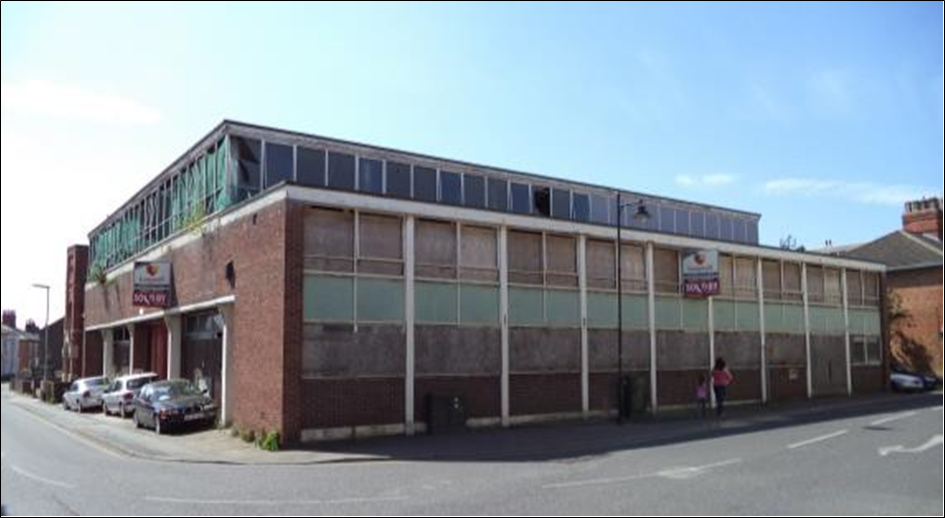
Following its closure the Royal Mail Sorting Office was sold to Dyden Limited, an offshore company registered in the British Virgin Islands for £312,500 on 26 June 2013. Again, for many years no proposal was forthcoming and it too became increasingly derelict.
Whilst eventually a proposal was put forward in 2021, which was not ideal, it was approved in May 2022. Work in the site is progressing, albeit at a pitifully slow pace.
Call for change in the law
Thus, by summer of 2021, there were three properties in the conservation area owned by offshore companies registered in tax havens with no obvious way of identifying who the beneficial owners were.
There was no way of reaching out to them, to ask them to at least maintain their properties in an acceptable state. We therefore made a public call for a change in the law that would require the ultimate beneficial owners to be identified on public records and followed this up by asking our local MP Sir John Hayes to take this up with the appropriate Government Minister. This he agreed to do, and after a few weeks we received a response (below) indicating that the Government had drafted some legislation that would go a long way to providing a solution, but that Parliamentary time constraints were such that it would not be forthcoming any time soon.
In February 2022, Russia invaded Ukraine and everything changed. The legislation that had already been drafted became the basis for the Economic Crime (Transparency and Enforcement) Act 2022, which was hurriedly passed through Parliament and the Register of Overseas Entities was introduced on 1 August 2022.
Other Grot Spots
In our June 2014 newsletter, we highlighted other brownfield sites in the town that had been left to rot for years. Sites that could, if developed, provide much needed housing or community facilities. Some have now been developed, others have had planning applications approved but remain undeveloped. In recent years successive Governments have blamed the planning system for housing not being built, but that ignores research published by the Institute for Public Policy Research in February 2025 which found that since 2007 nationally 1.4 million homes have been approved for development, yet have not then been built. Some are in Spalding.
Should not the Government also be looking at this issue as well?
Other sites have simply been left for years with no proposal being put forward. Examples of both below.
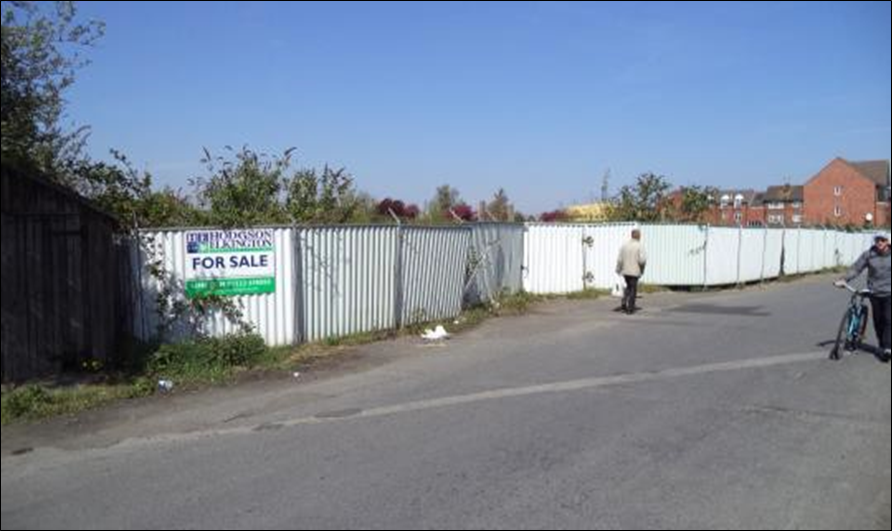
Since 2007 there have been three different planning applications for a care home on this site. All approved – Nothing built. The site is currently for sale.
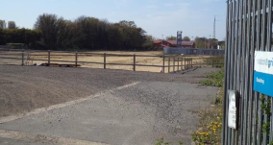
Closed in 1983. Brownfield site. Together with the Castle Sports playing field, it could provide a green corridor from Pinchbeck Road to Albion Street.
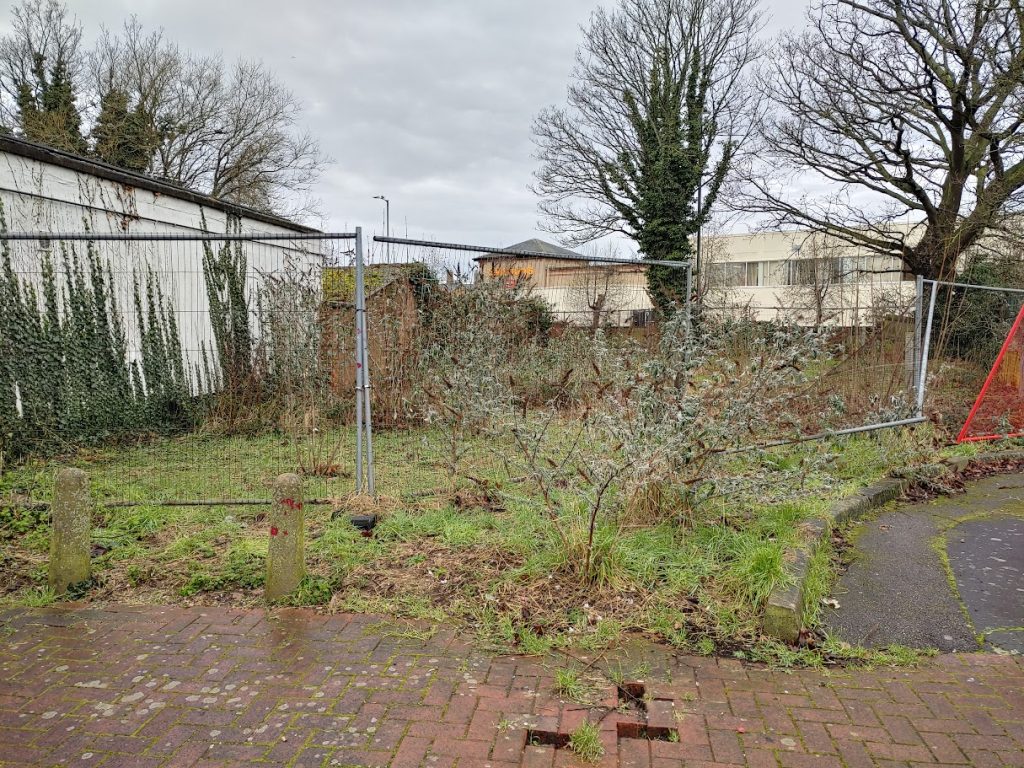
Derelict for years. Could be a community garden.
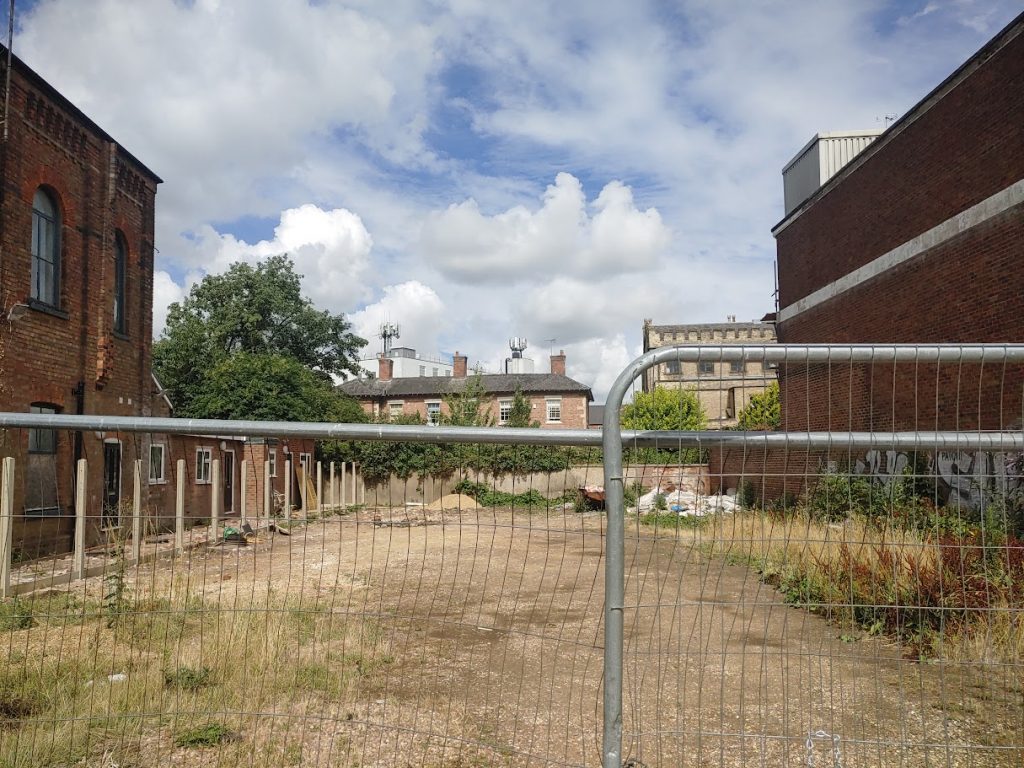
Inexplicably this site has not been considered when looking at options for the Old Royal Mail Sorting Office. In a sensitive part of the conservation area, any development here needs to be right for the site and the surrounding area.
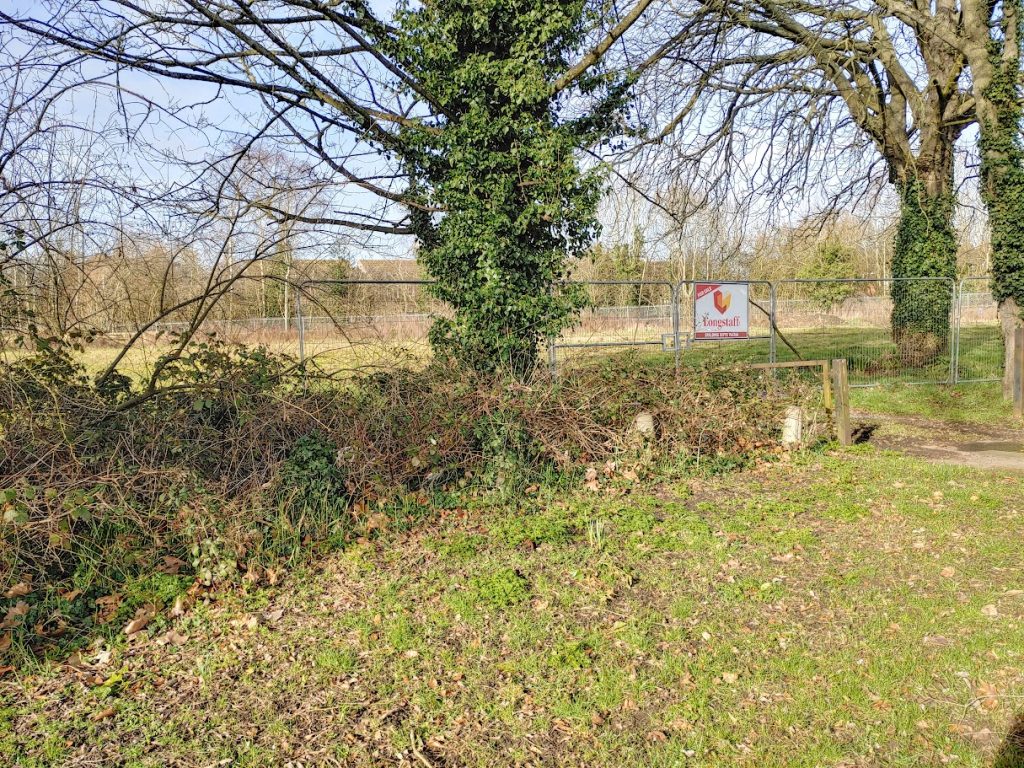
Owned by Lincolnshire County Council. Vacant for about 50 years in case a new road was cut through from Station Approach to join West Elloe Avenue. Sometimes used by rough sleepers.
Recently advertised for sale as an industrial opportunity. Surely, though, this should be an opportunity for residential development or for much needed accessible public green space?
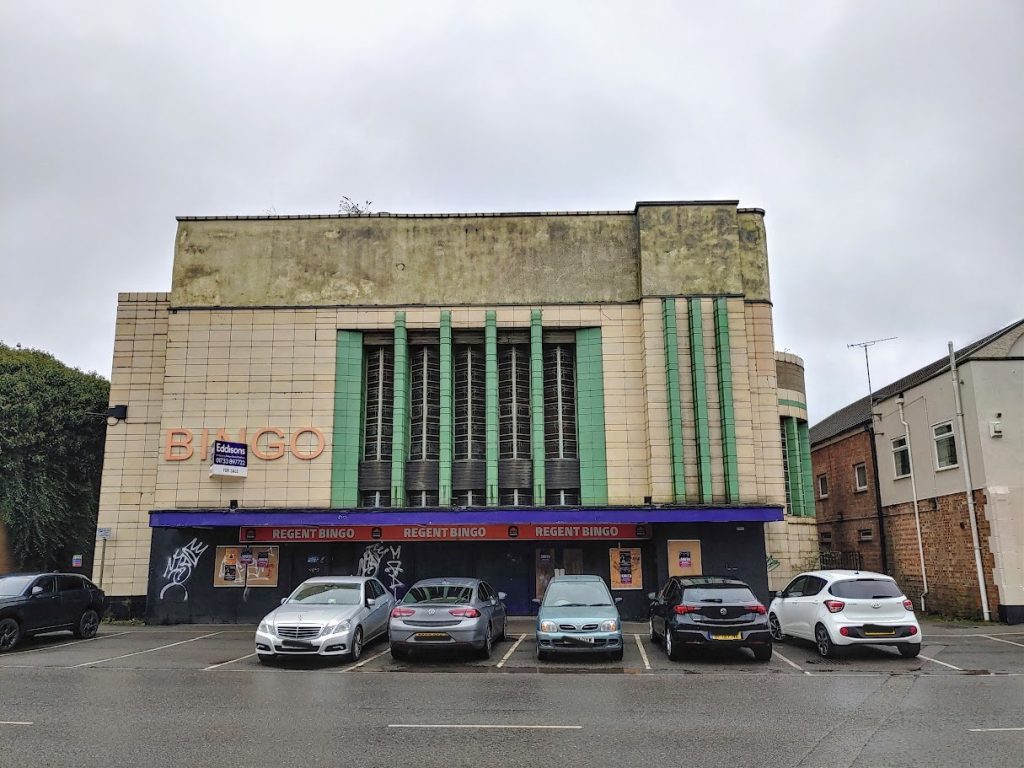
Opened in 1936 as the Savoy Cinema. Classic Art-deco design by Alfred J Thraves . Converted to a Bingo Hall in the 1970s. Fire damaged in 2021. Supposedly purchased in early 2025. No plans forthcoming.
This building is local landmark and an important part of the town’s heritage. If you own this site, please contact us to share your plans.
What regeneration could look like in practice
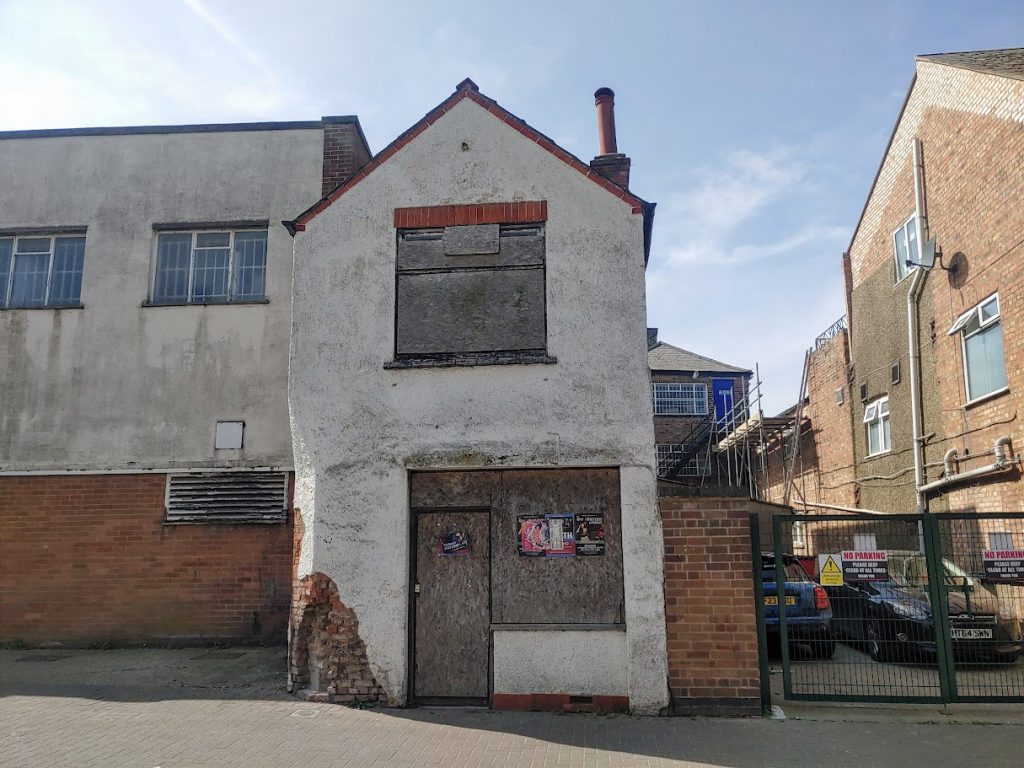
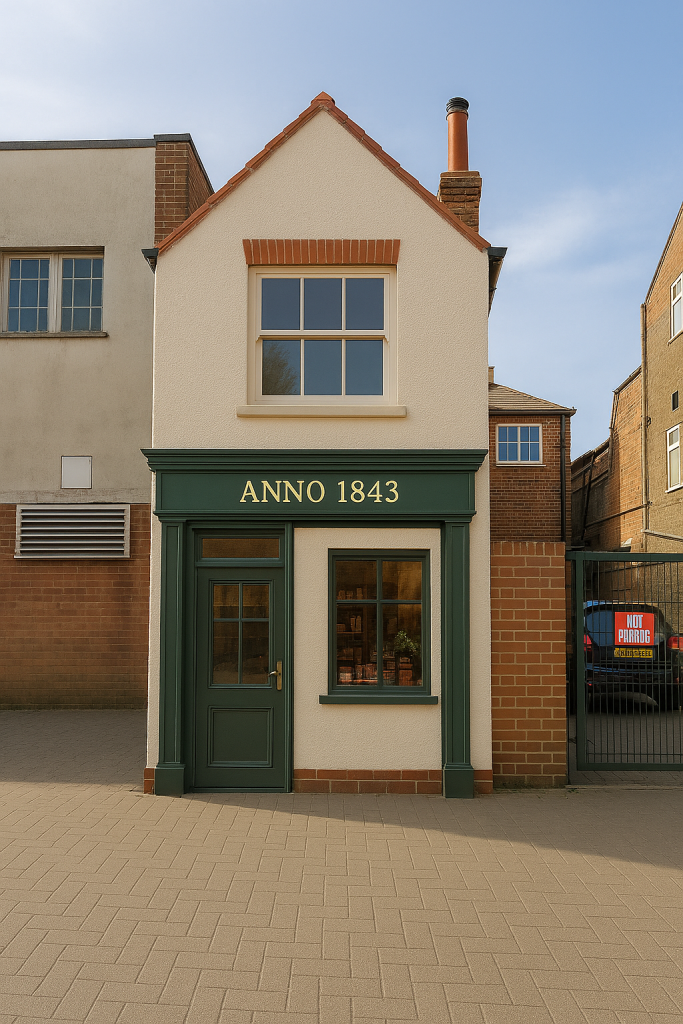
Now does that not look better?
Of course it is a lot harder to achieve a transformation like the above in practice. It needs conversations with property owners, it needs grant funding to be explored to pay for the work and it needs it needs the will to do it, and above all it needs a bit of imagination and vision. This is where a form of partnership between the Council and/or other parties willing to approach property owners to kickstart the conversation could provide a solution to addressing these issues.
Partnership
Why other parties? Because local authorities do not necessarily have the resources to commit someone to spend the time identifying who the landowner is and have that initial conversation to see if they would at least be open to further discussions to secure the futures of run-down buildings in the town. However, if the local authority were to work with the Society as an equal partner on these kinds of actions, then we could make the initial approaches to at least establish whether it was a starter. This is something that Civic Societies do. They seek to protect the heritage of the town. This does not only have to be through the planning system; it can be through a genuine partnership between the Council and ourselves. After all, if you look at the history of the Civic Movement, it was quite clear that when the Civic Trust was set up in 1947, it was intended to be a partnership involving politicians, local government officers, professionals such as architects, and ordinary people with a shared desire to see the best outcomes for the built environment of the town, paying particular attention to high standards of architecture and design of new buildings and taking action to protect and conserve historic buildings that have fallen into disuse.
When our own Society was set up in 1960, it seems that there was a desire to form a similar partnership locally as well with the initial meeting to form our society being attended by many prominent townspeople including local government officers, schoolteachers, solicitors, traders, businessmen and a doctor. Over the years, that sense of partnership may have been lost. If more join us, then that partnership could be renewed, which would enable the Society to undertake more of the behind-the-scenes work that is necessary to ensure Spalding is maintained to the standard that many would like to see.