
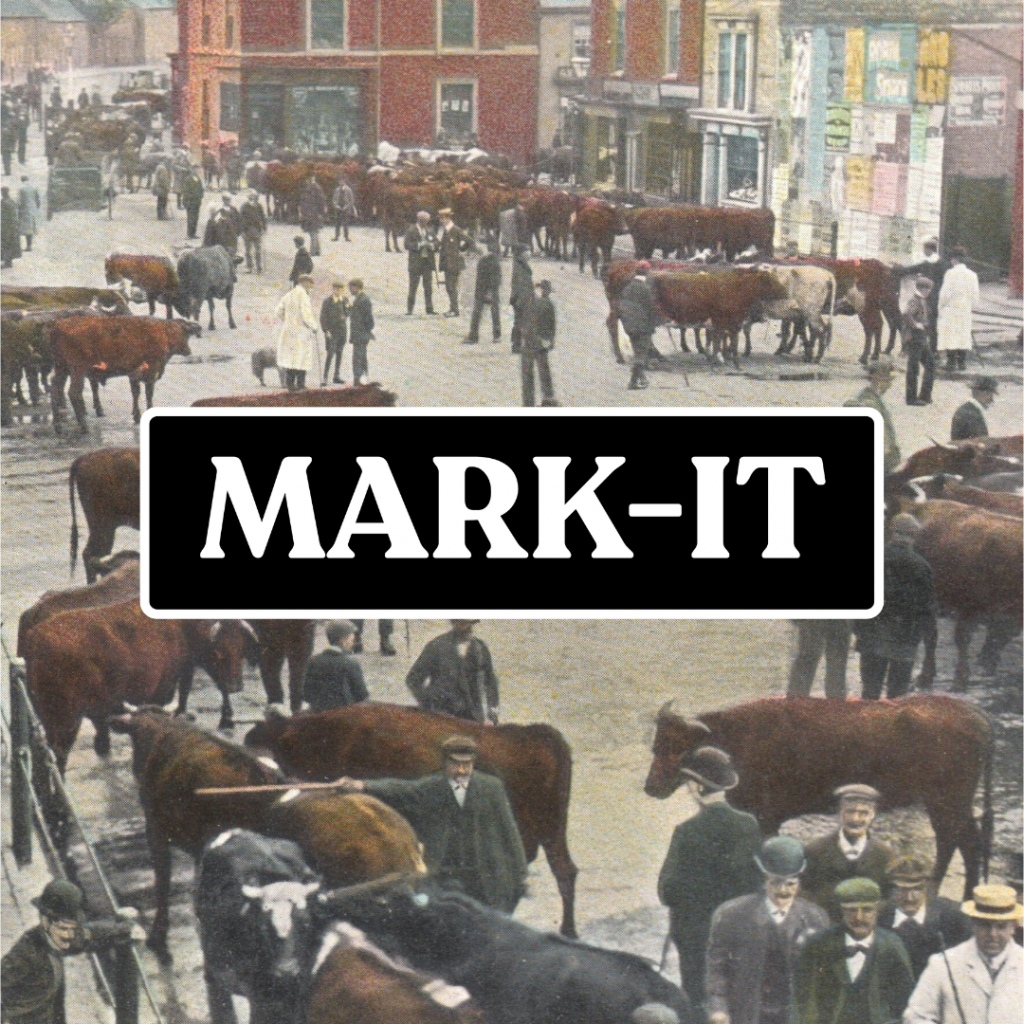
We have now installed the information boards to go alongside our sheep and cattle sculptures that form part of our developing MARK-IT Trail which is our long term strategic project to tell the story of Spalding’s Market heritage dating back to before Domesday.
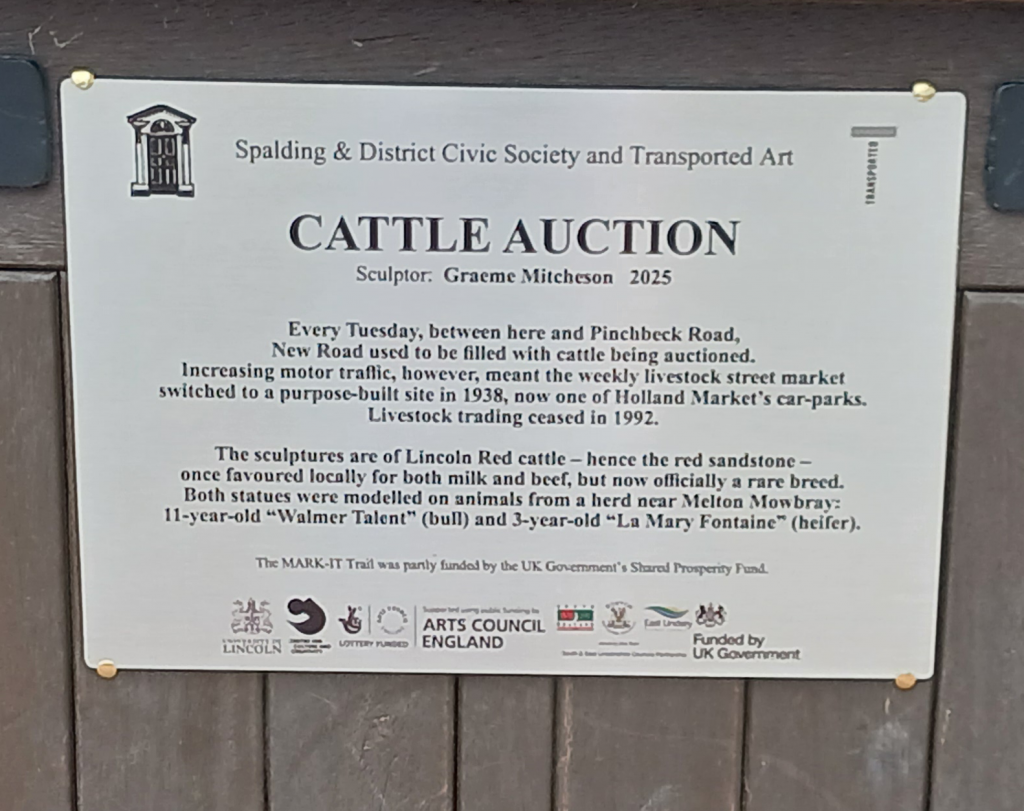
Cattle Auction is the name given to the lifesize sculptures of a bull & heifer, carved in red sandstone modelled on two living Lincoln Red cattle from a herd near Melton Mowbray and are positioned as close as possible to the site of the original cattle market that was held on New Road until 1938.
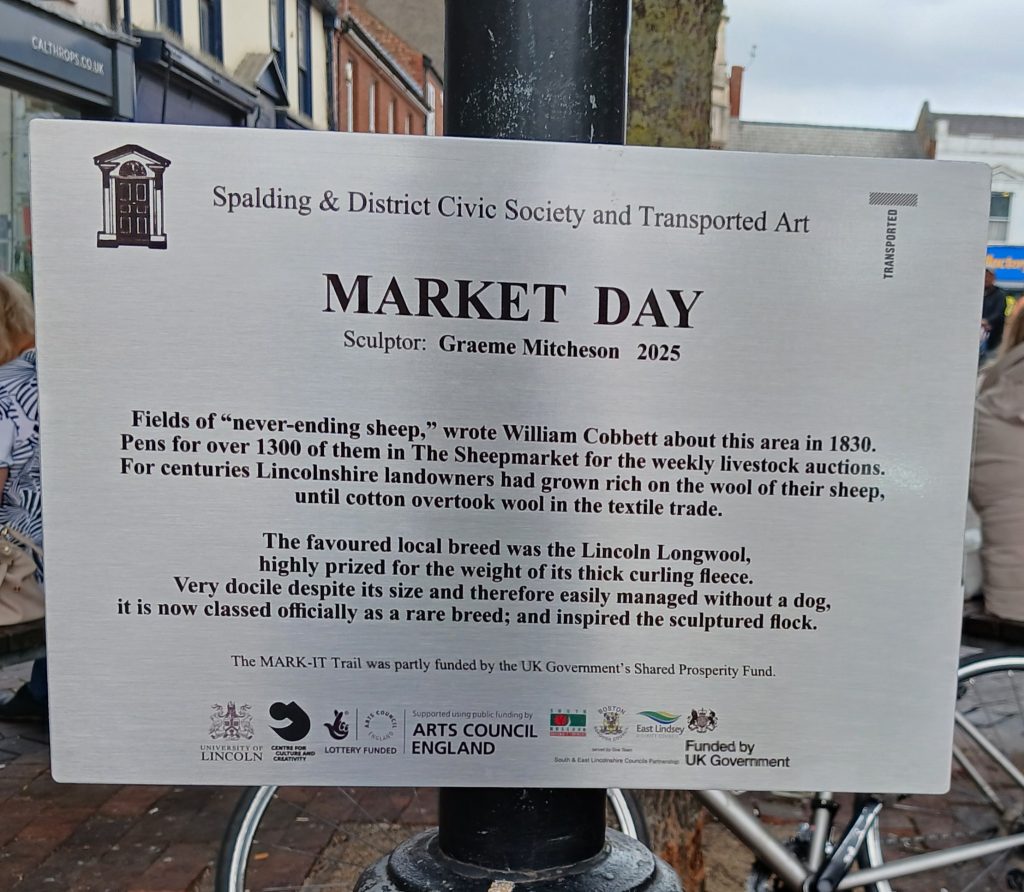
Market Day is the name given to the small flock of sheep carved in limestone based on the Lincoln Longwool breed that would once have been a familiar sight in Spalding as they were sold in the weekly livestock auctions from which The Sheepmarket takes its name.
William Cobbett the journalist, agriculturist and political reformer, who was a prominent anti corn-law campaigner visited this area as part of a series of journeys to rural communities in the South East of England and the Midlands between 1821 and 1826, before he published his book “Rural Rides” in 1830.
“I walked on from Holbeach, six miles, towards Boston; and seeing the fatness of the land, and the fine grass and the never-ending sheep lying about like fat hogs, stretched in the sun…”
William Cobbett
Anti-Corn Law Campaigner
Rural Rides 1830
This eBook is for the use of anyone anywhere at no cost and with almost no restrictions whatsoever. You may copy it, give it away or re-use it under the terms of the Project Gutenberg License included with this eBook or online at www.gutenberg.org