MARK-IT: Cattle Auction

MARK-IT: Cattle Auction

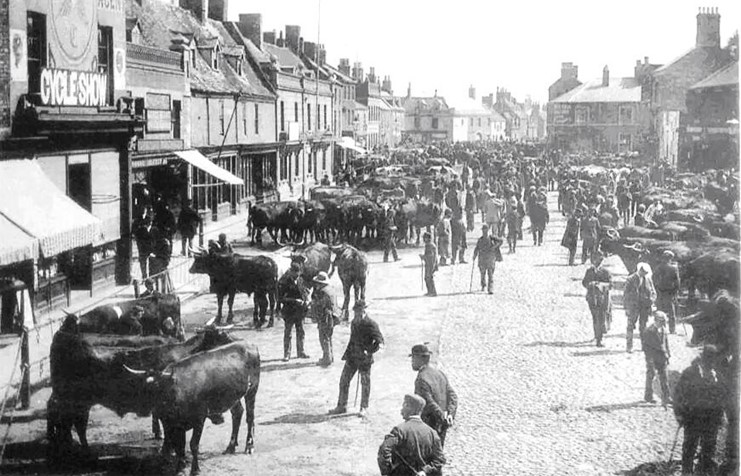
Busy New Road Cattle Market

It was thanks to a successful application for funding to the UK Shared Prosperity Fund that we were able to embark on the most ambitious phase of the MARK-IT Trail. We were awarded a grant of £43,000, and together with our partners Transported, we advertised two commissions in February 2024 via outlets targeted at professional artists such as Arts Jobs supported by the Arts Council and on social media. One was to recall the sheep auctions that took place in the Sheep Market. The second was to recall the cattle market on New Road.

Commission criteria
The MARK-IT Trail aims to increase awareness and appreciation of the town’s heritage and celebrate Spalding’s market in its livestock heyday (also the annual hiring fair), along with South Holland’s present-day importance to the nation’s food supply.

  • The two commissions were to produce two new pieces for the centre of Spalding.
  • The successful Artist was expected to contribute to a public engagement programme, alongside Spalding Civic Society members and the Transported Arts Team, to make maximum value from the project.
  • Commissioned artists were expected to work with the partners to provide information and designs to assist in getting planning permission and local authority endorsement.
  • The completed artworks would require minimal maintenance, and any works needed would need to be specified from the outset, allowing the commissioners to understand long-term implications and liability.
  • The artworks were to be sited in the centre of a busy Market town, so the artworks would need to be safe and robust, and would be expected to last for 20 plus years, so detailed specifications for materials, fabrication, siting, and installation were required for the shortlist phase of the selection process.
Seventeen artists responded, from Devon to North Yorkshire. Even one from France. A shortlist of seven was drawn up on 25 March 2024. They were invited to attend an interview at Ayscoughfee Hall, bringing with them their site-specific proposal, illustrated through drawings and potentially a Maquette or model of their proposal.
Winning artist – Graeme Mitcheson
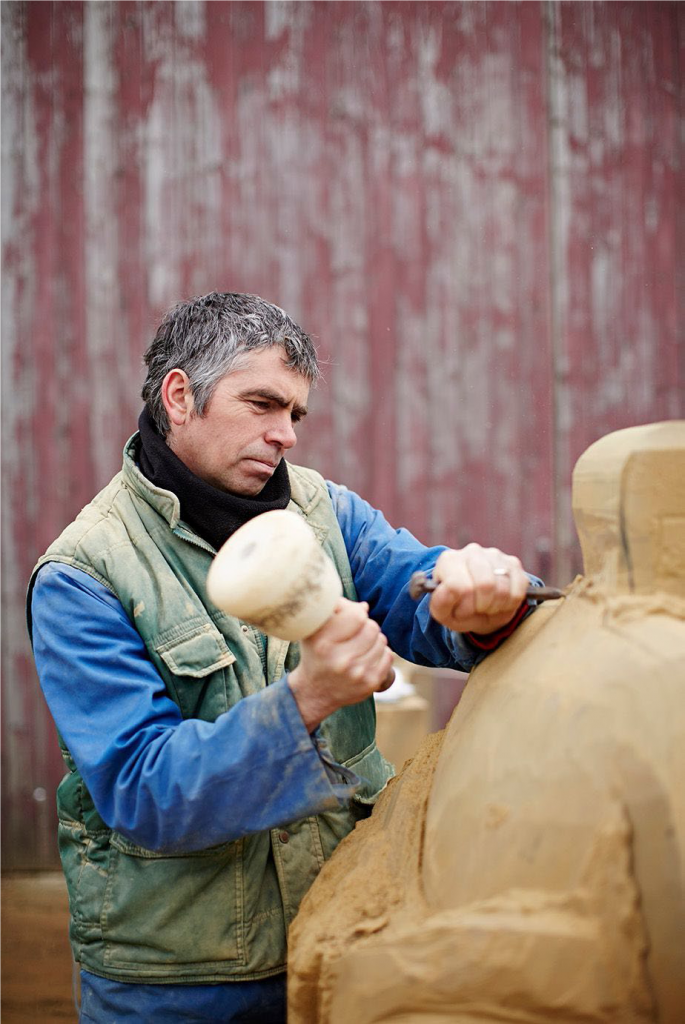
After much deliberation, we revealed our choice of the winning artist at our AGM in 2024. He was award-winning Leicestershire sculptor Graeme Mitcheson. 
 
Graeme’s monumental stone sculptures can be found all over the UK, and include works commissioned by Sheffield and Wakefield City Councils, English Heritage, and the Woodland Trust. A memorial tribute to former England football manager Sir Bobby Robson is situated in Newcastle city centre and he has created three particularly striking public art works for Caernarfon Castle in North Wales. He is an Associate Member of the Royal British Society of Sculptors.
 

Graeme has been creating significant and large-scale works for the public realm all over the UK for over 25 years. His first significant individual commission was for Astra Zeneca Pharmaceuticals in Loughborough in 1999 where he created “Cures”, a 2-metre tall, hollow white limestone column with a spiralling inscription of more than 3,000 carved letters. Since then, other major works have included a 3 metre tall mussel sculpture for Conwy Quay in North Wales which is a world heritage site, a 22m long concrete earthwork on an embankment in Lutterworth, Leicestershire. He has since completed major memorials for the Bevin Boys, the Scouts and for the Naval Service at the National Memorial Arboretum in Staffordshire. The latter was shortlisted for the PMSA Marsh Award for excellence in Public Art 2016. Graeme has created several stone sculpture trails while one of his most recent projects was a series of interpretative sculptures installed in the grounds of Caernarfon Castle in North Wales.

Graeme lives in Leicestershire and has a website which showcases his work.

 www.chisel-it.co.uk

Graeme Mitcheson
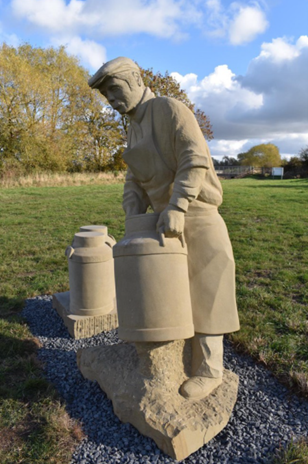
Milk Churn Man, Hatton Derbyshire
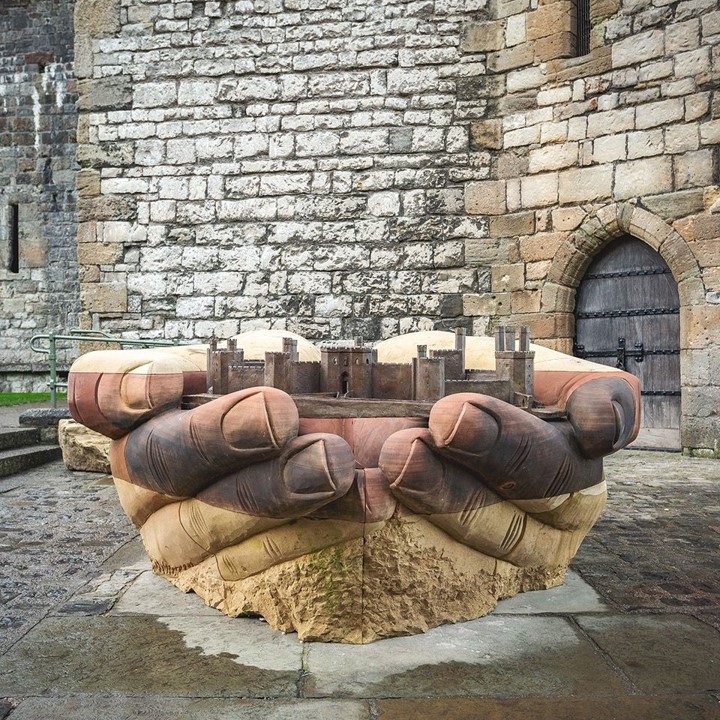
The Architects Hands, Caernarfon Castle

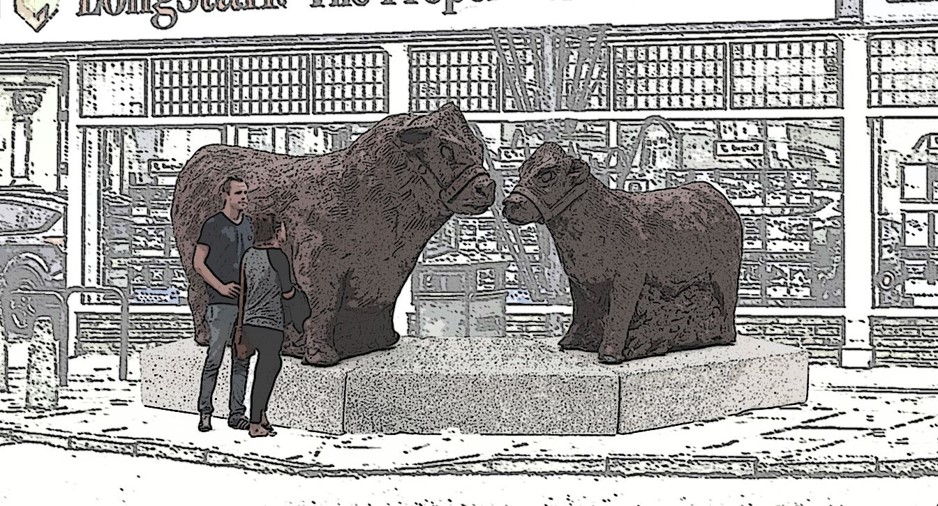
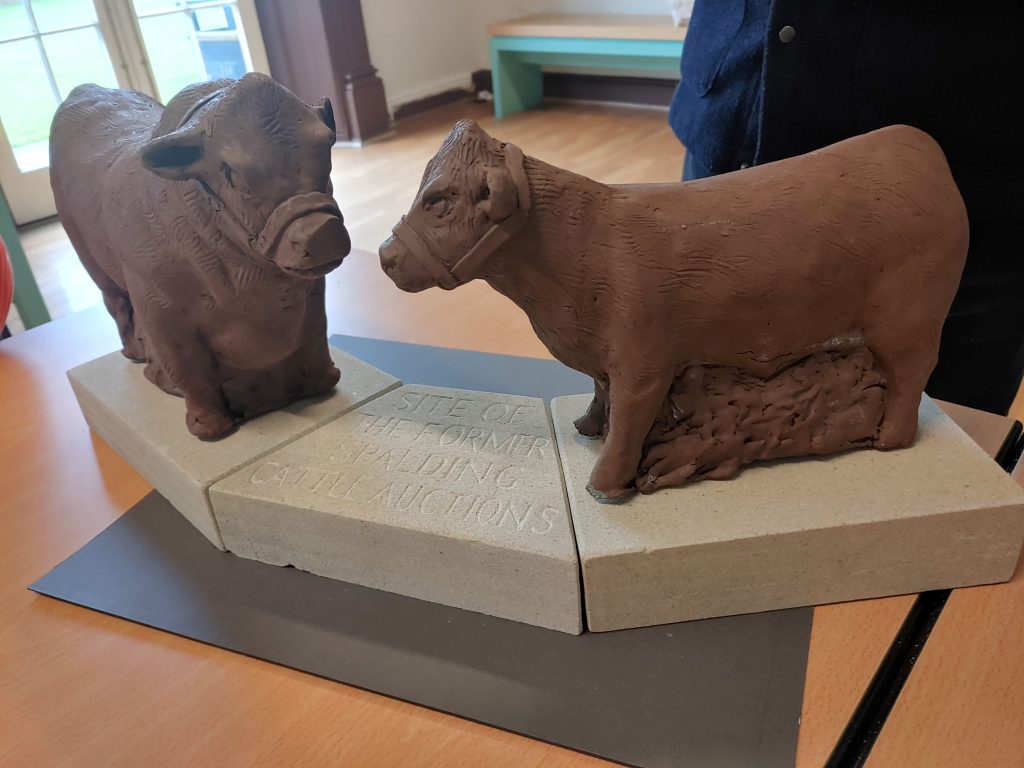
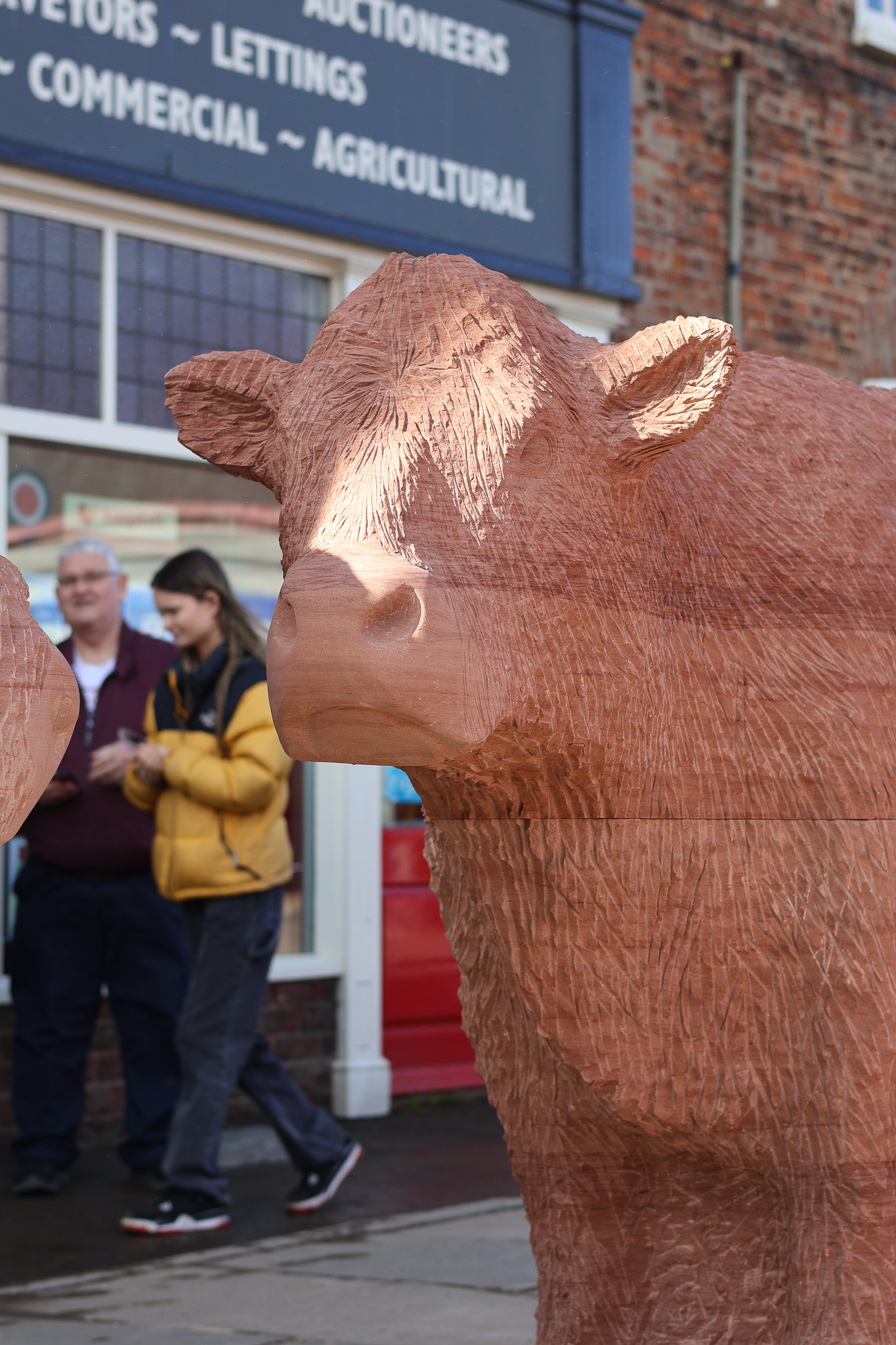
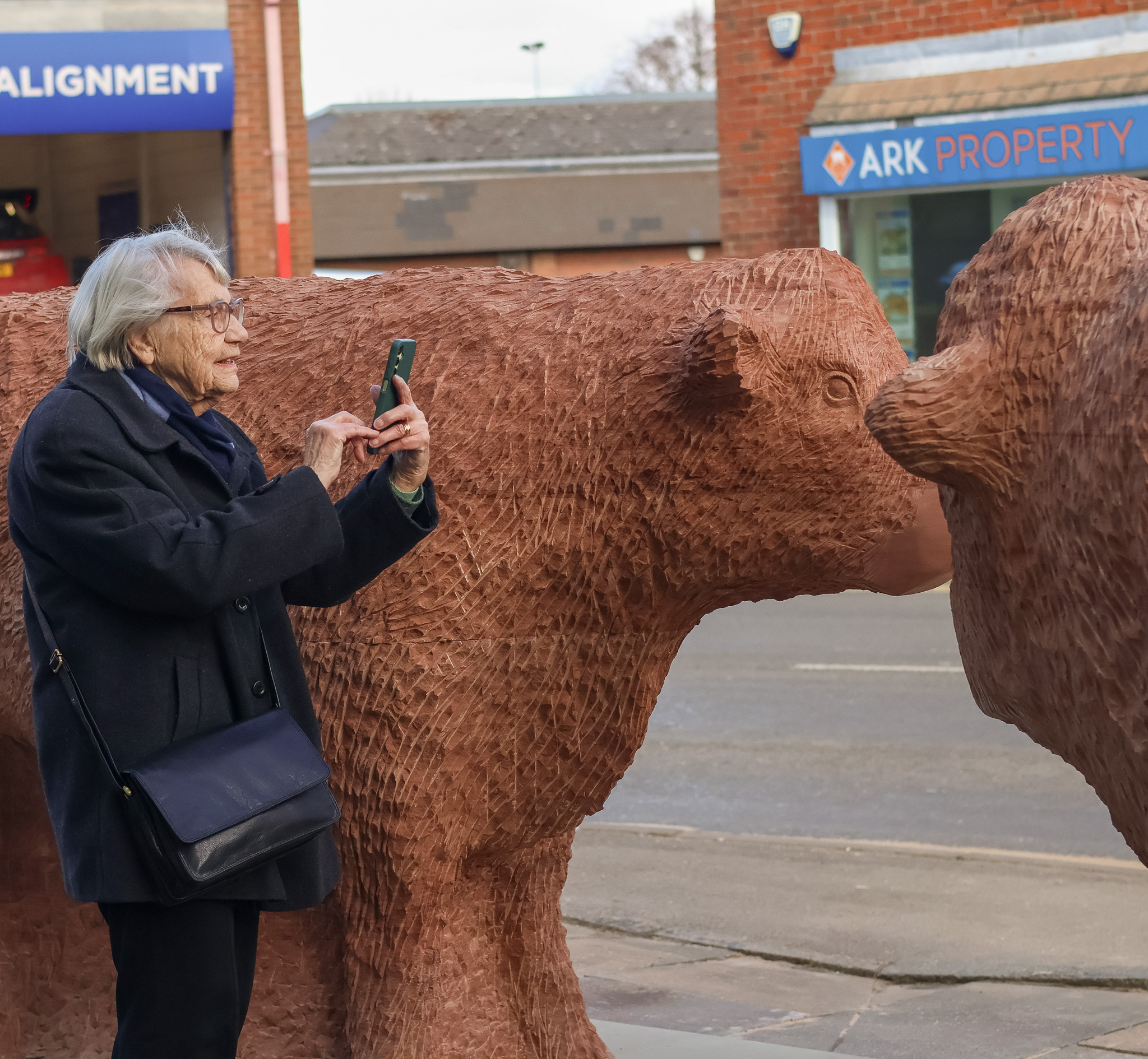
Graeme proposed two lifesize sculptures of a bull & heifer based on the Lincoln Red breed of cattle, which are now considered to be a rare breed, but would have been familiar sights on the streets of Spalding.

Graeme's original concept for the cattle sculptures
Graeme's clay model of the bull & heifer

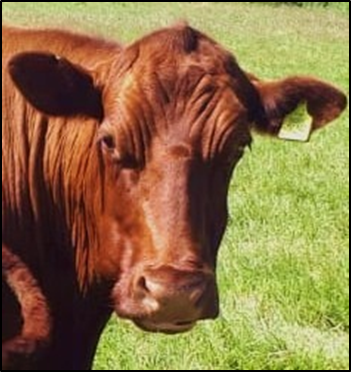
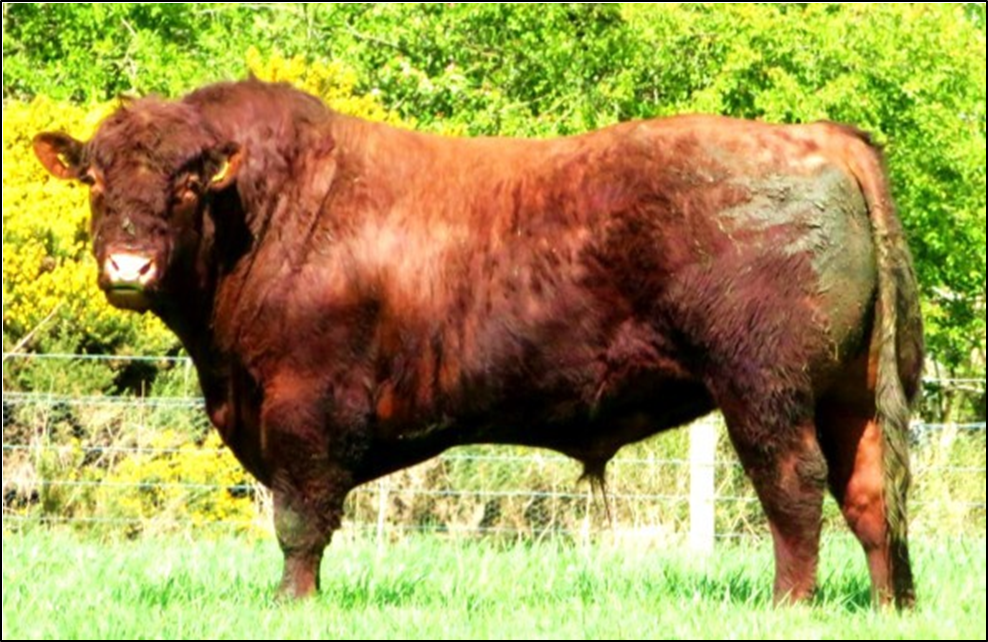
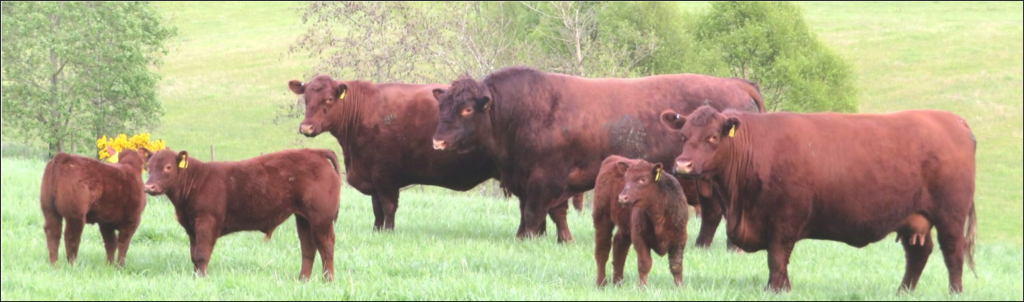
The Lincoln Red

Information supplied by the Lincoln Red Cattle Society.

Lincoln Red Cow

The Lincoln Red emerged from crossbreeding in the late 18th and early 19th centuries and was subsequently bred as a dual beef and milk animal.

The Lincoln Red is reasonably large-framed, with a strong, broad muzzle, well-placed legs and sturdy feet. They are a deep cherry red in colour. An early maturing breed, they require minimum care, are easy calvers and are not prone to sunburn or eye cancer.

They are feed-efficient, being good convertors of forage and easily adaptable to regional grazing and climate conditions.

Their beef is marbled, flavourful and succulent. 

Nevertheless, with the widespread importing of continental breeds in the 1970s and 1980s, Lincoln Reds, along with other indigenous British breeds, fell out of favour. The pendulum, however, has begun to swing back again. With the ever-increasing cost of imports, native breeds, with their feed efficiency off pasture, are returning to popularity again.

Lincoln Red Bull
Lincoln Red Herd

What they are made of

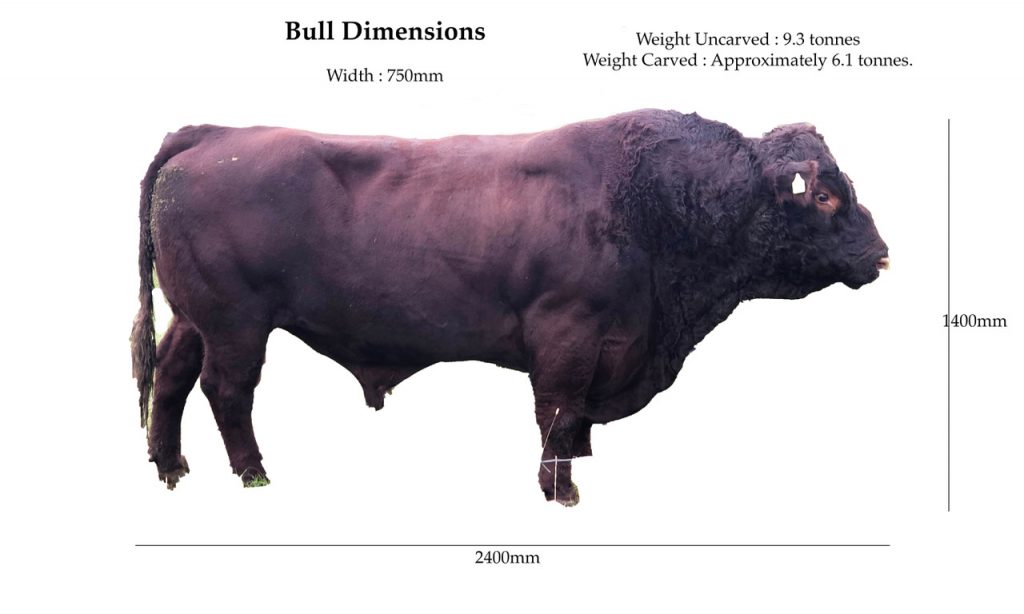
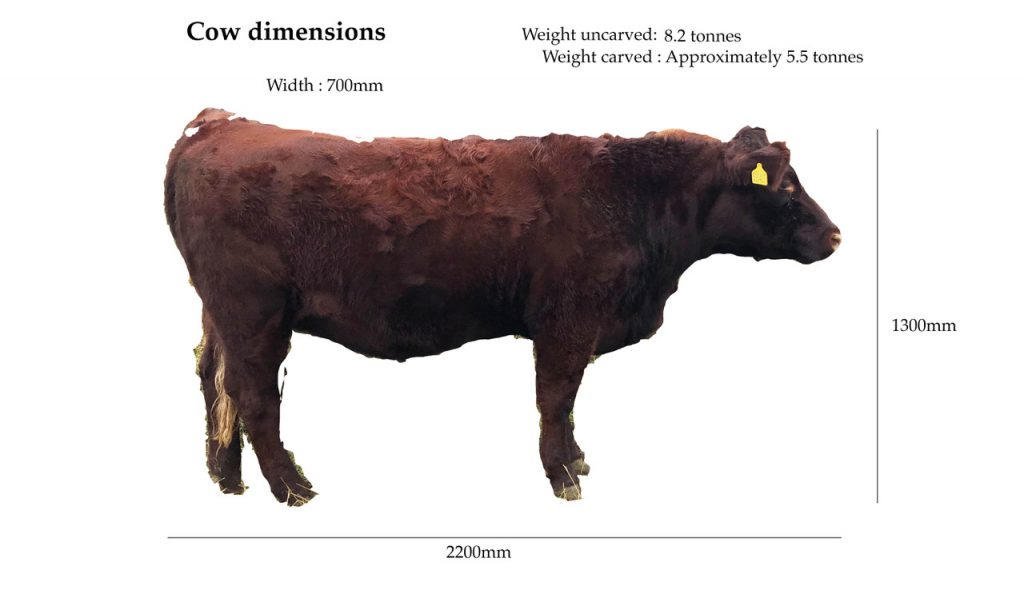
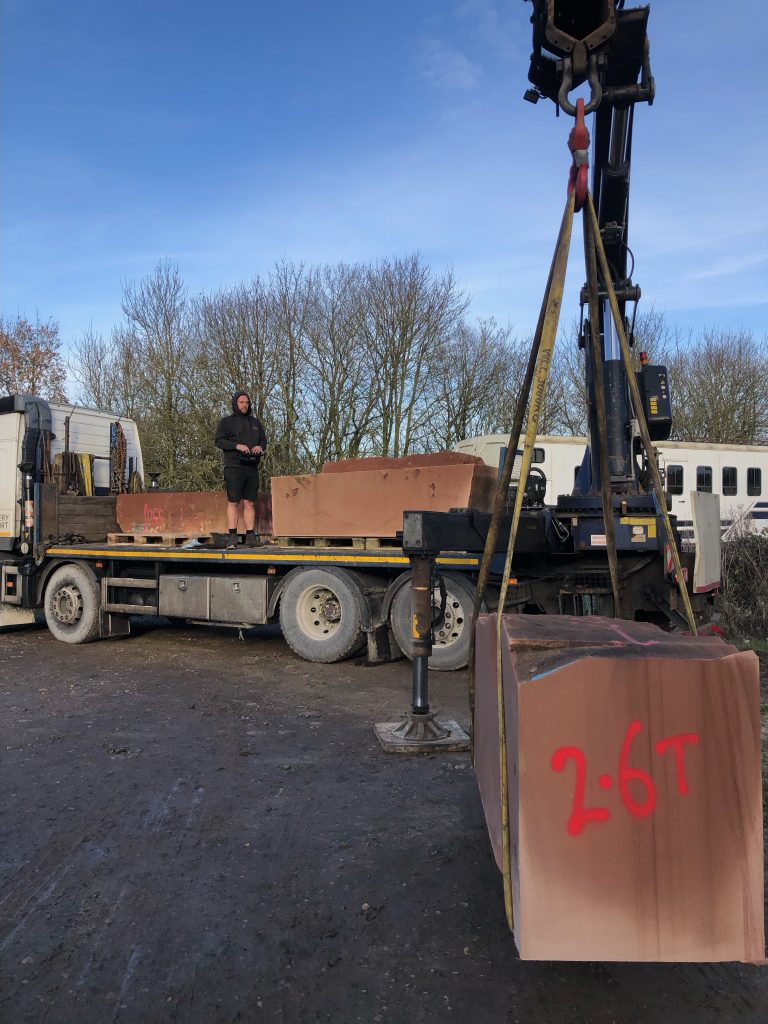
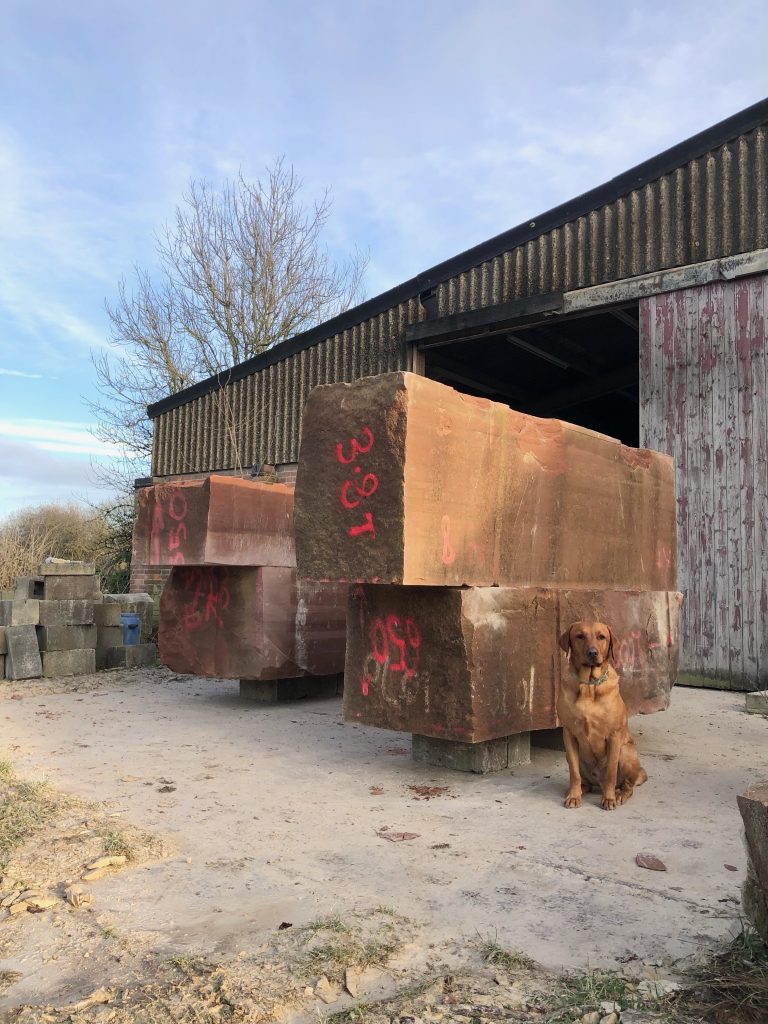
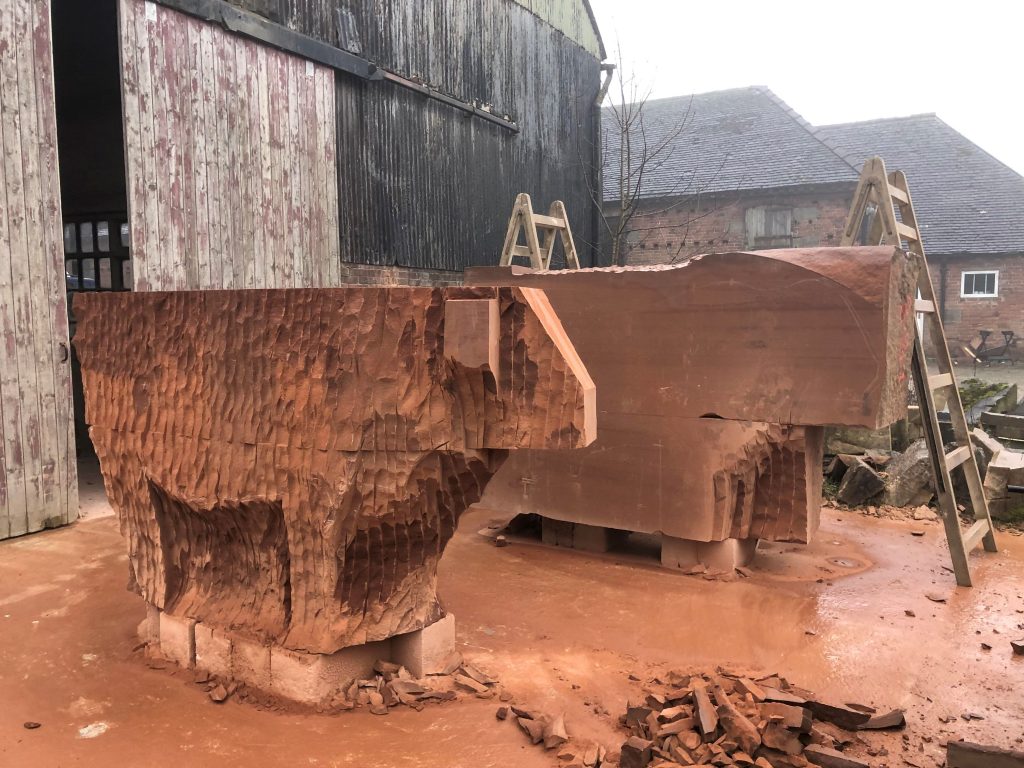
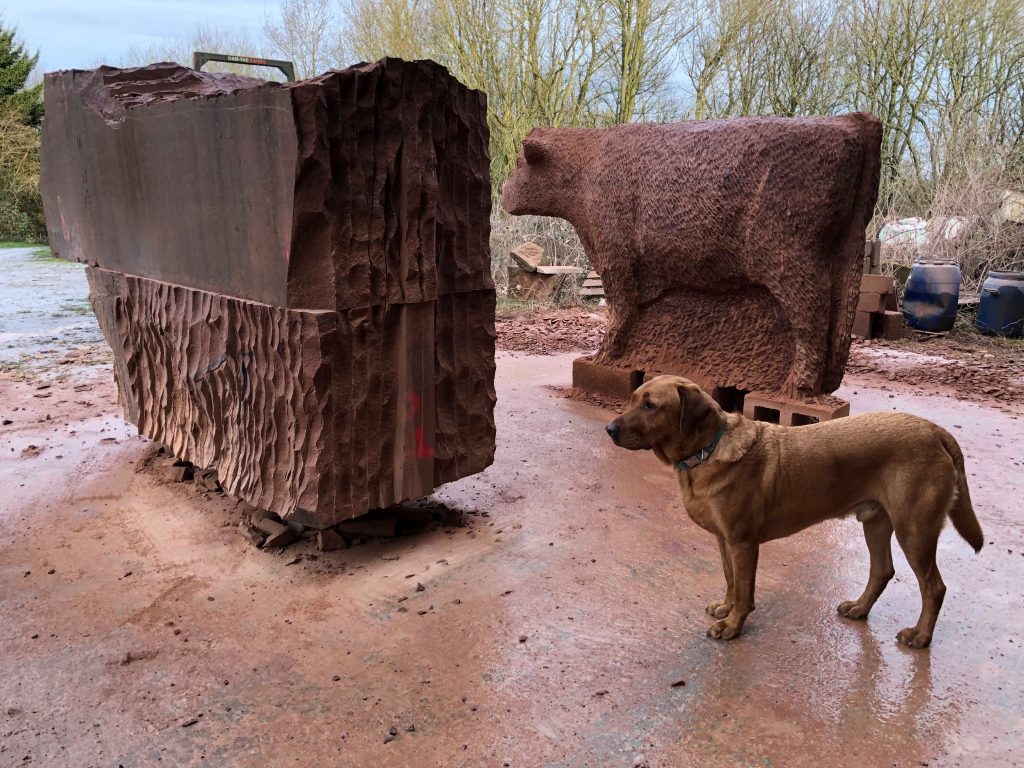
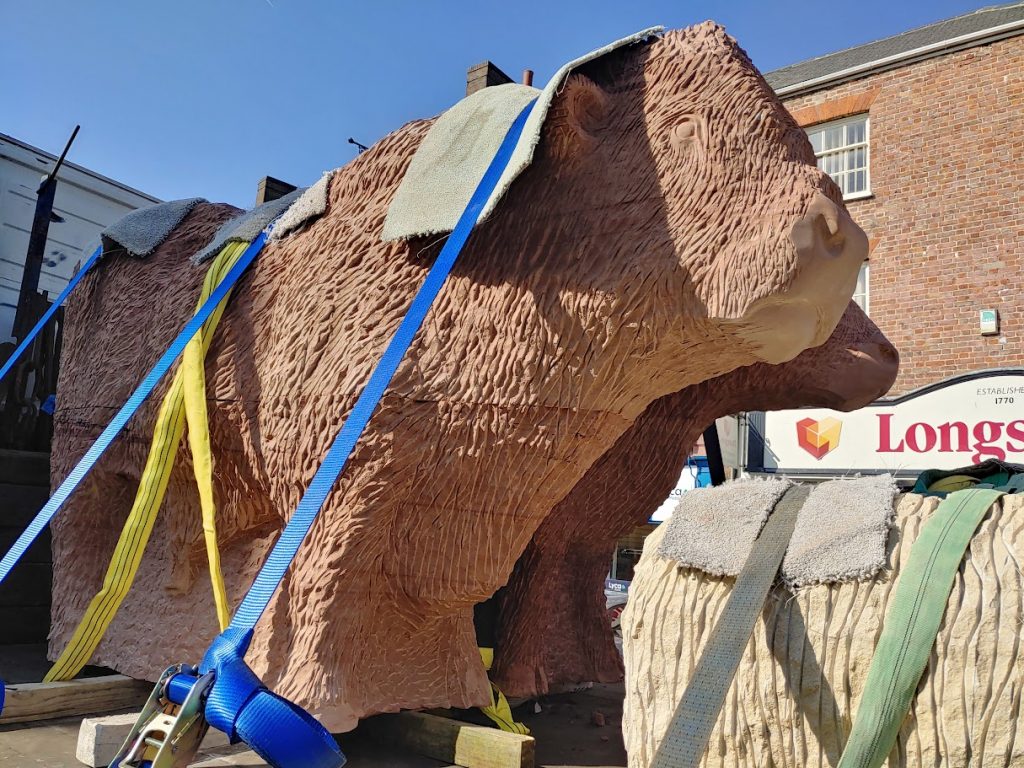
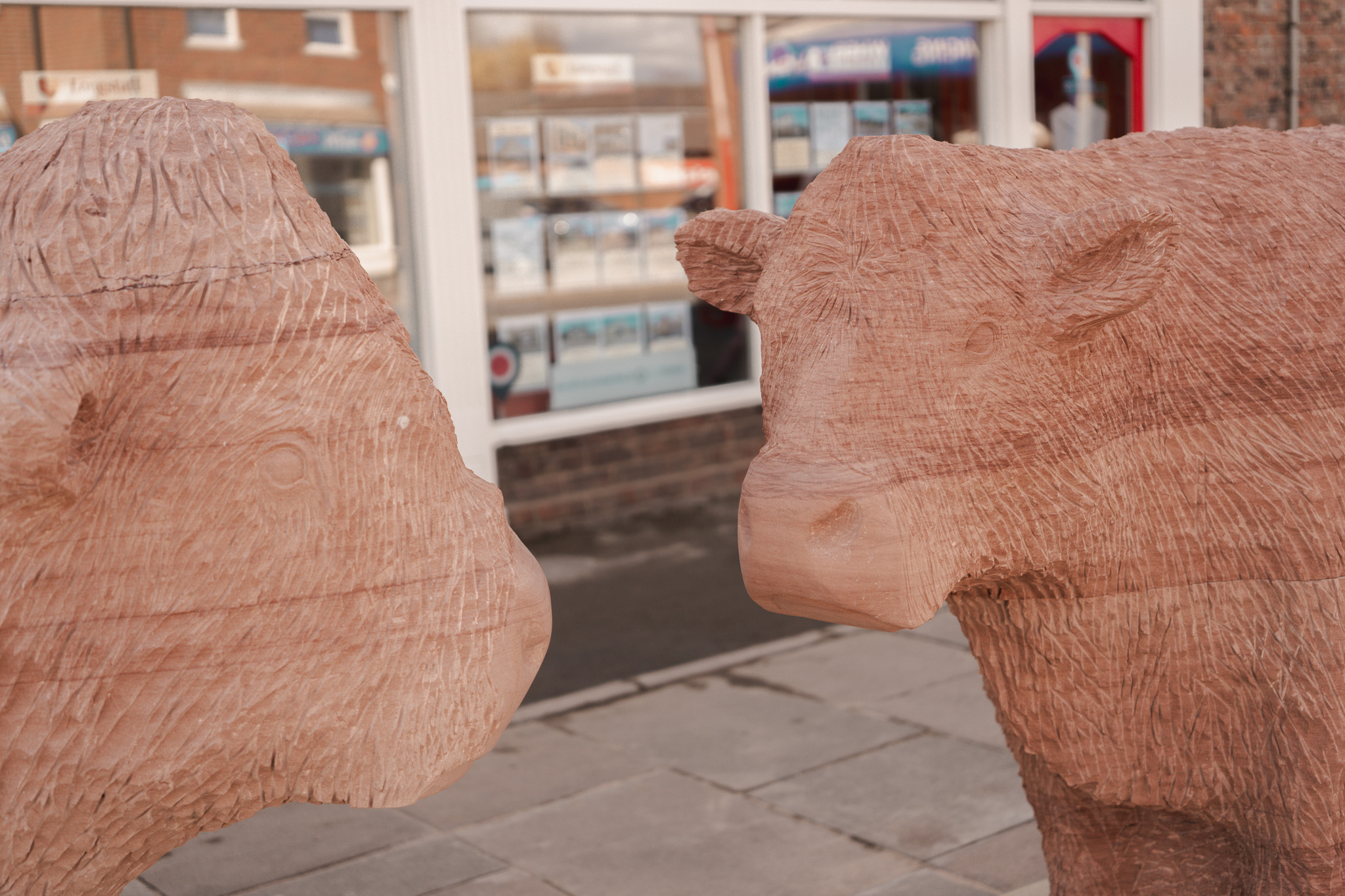
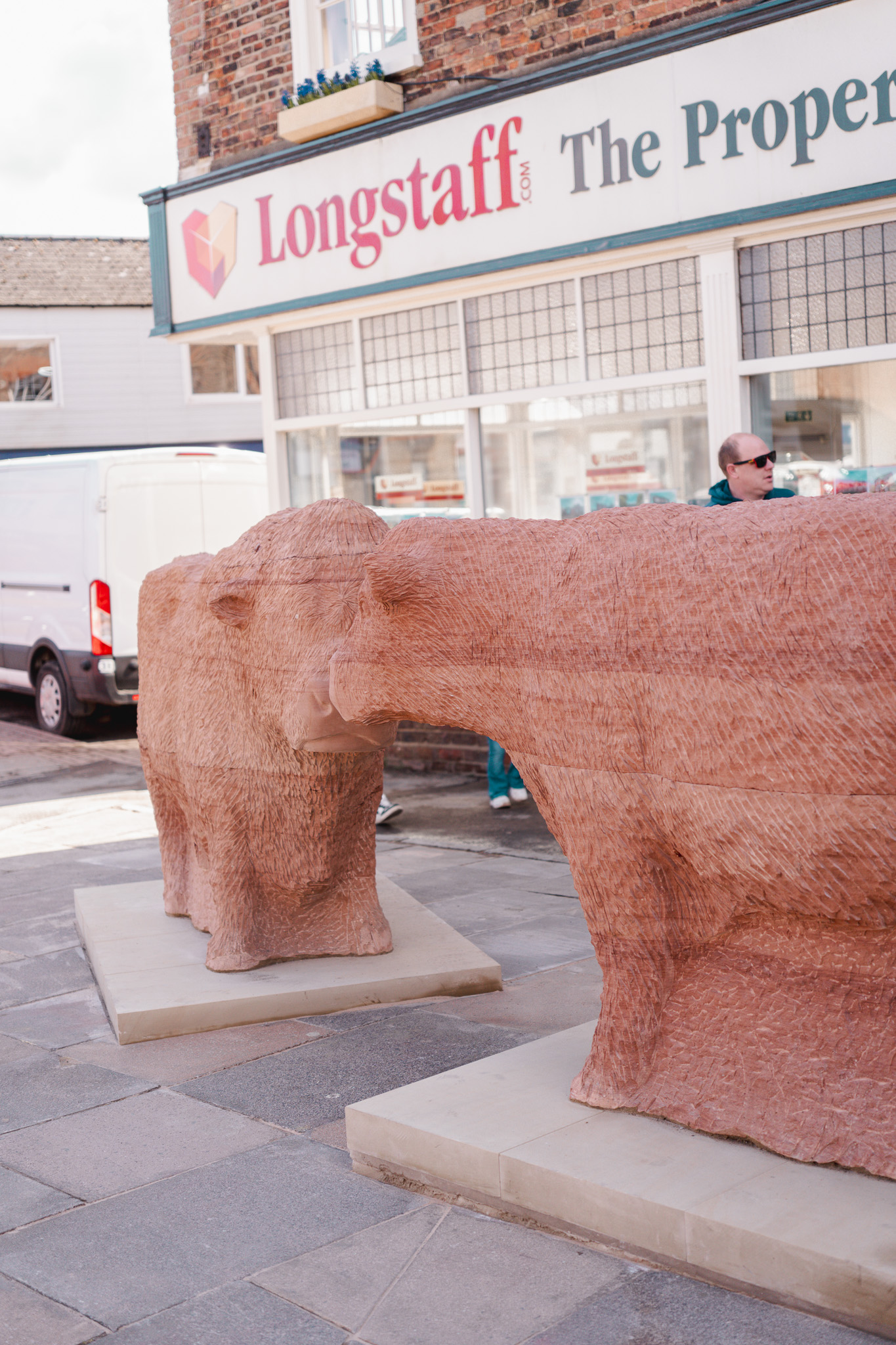
The cattle are made out of large blocks of cove red sandstone. The bull weighs approximately 6.1 tonnes whilst the heifer weighs approxiamately 5.5 tonnes.

Bull dimensions and weight
Heifer dimensions and weight
Cattle Stone delivery - Photo supplied by Graeme Mitcheson
Cattle Stone delivery - Photo supplied by Graem Mitcheson

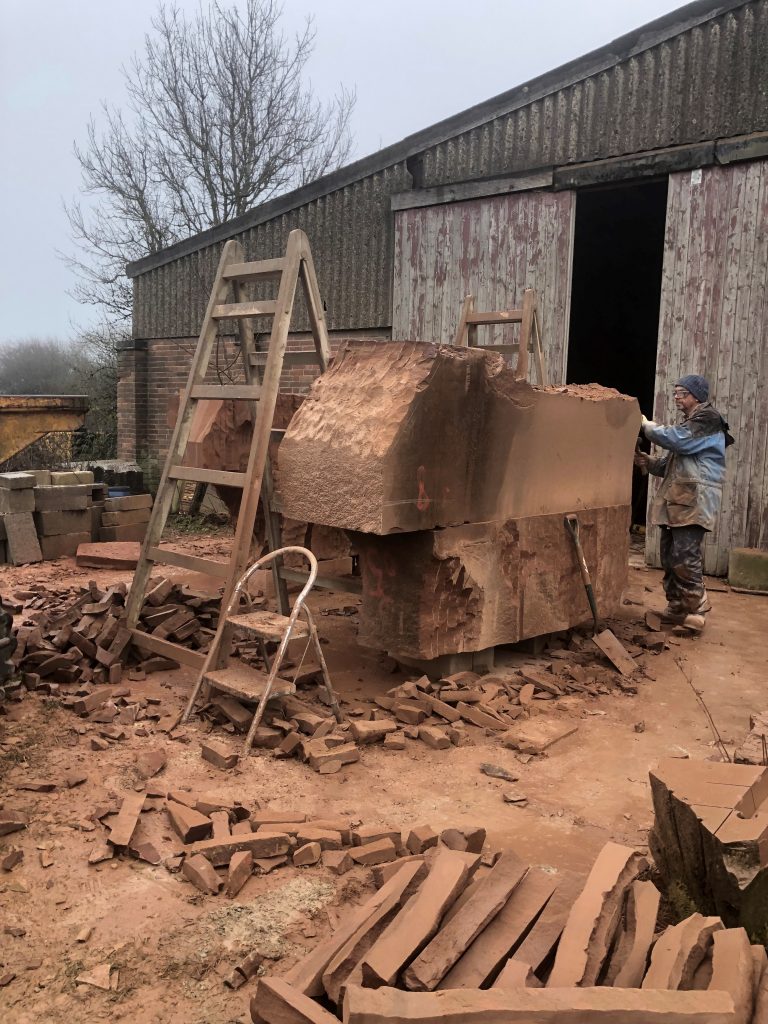
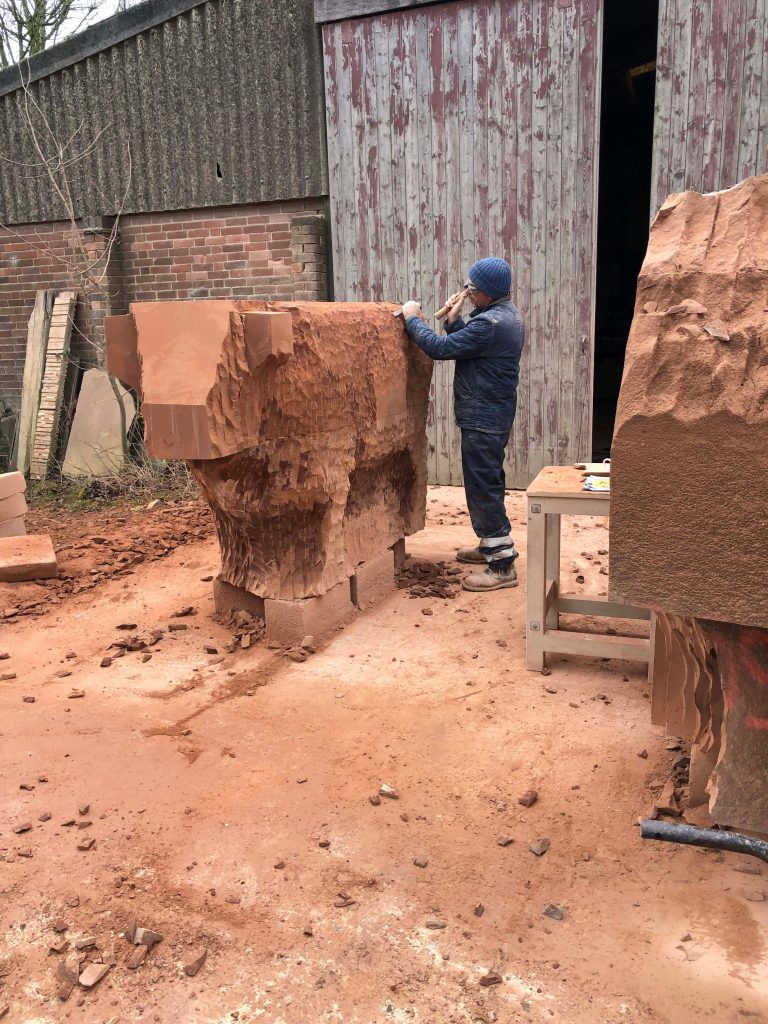
How they were made

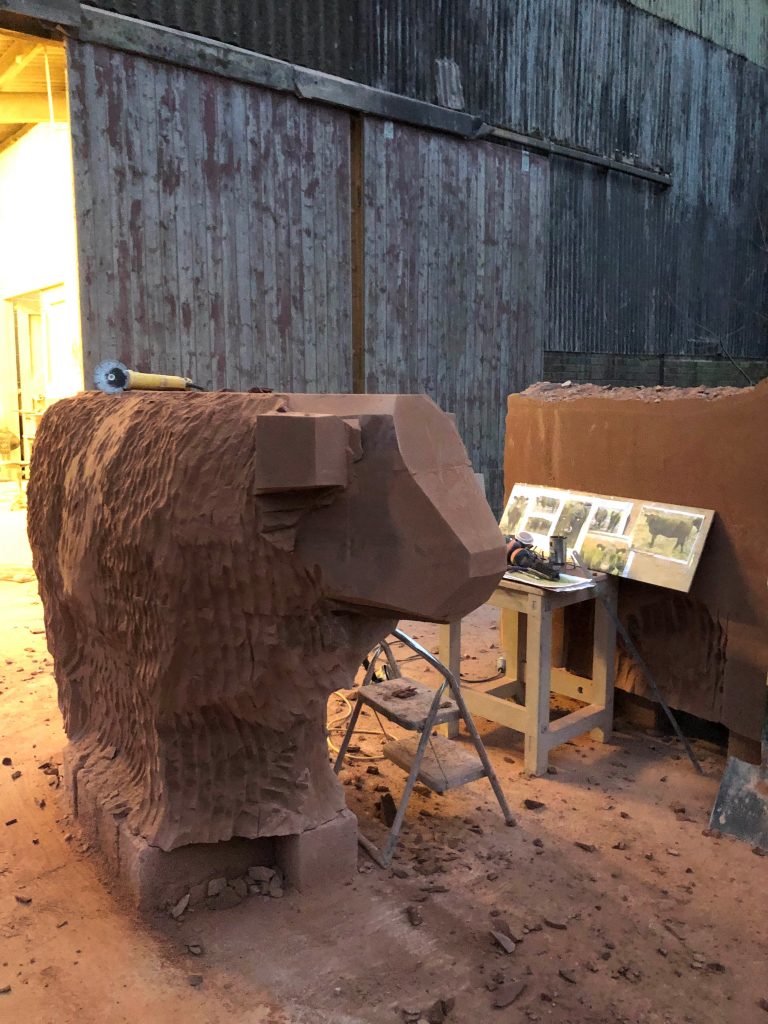
Life-size, both sculptures were modelled on individual animals from a herd of Lincoln Reds bred by Scott Thompson, who farms near Melton Mowbray. 

Scott has 80 cattle, all of which he knows by name and can even tell what they have been eating, just by looking at them.  Graeme visited the farm on several occasions  to photograph the cattle, and Scott helped by taking a number of measurements whilst the cattle were in a holding pen. The bull is called “Walmer Talent” and was 10 years old, in 2024, and was originally bred by Hedley Needler, a highly regarded breeder of Lincoln Red cattle who farmed near Louth. Graeme described the bull as  “an enormous, very handsome and muscular beast with an extremely striking physique. I will be looking to capture this look with the sculpture.”

The heifer is modelled on 3 year old “La Mary Fontaine” bred by Scott Thompson. 

Bull taking shape - Photo supplied by Graeme Mitcheson
Heifer taking shape - Photo supplied by Graeme Mitcheson
Looking more like a cow -Photo supplied by Graeme Mitcheson
Cow and Bull - Photo supplied by Graeme Mitcheson
Illustration of the scale of the sculptures - Photo supplied by Graeme Mitcheson

How they were installed

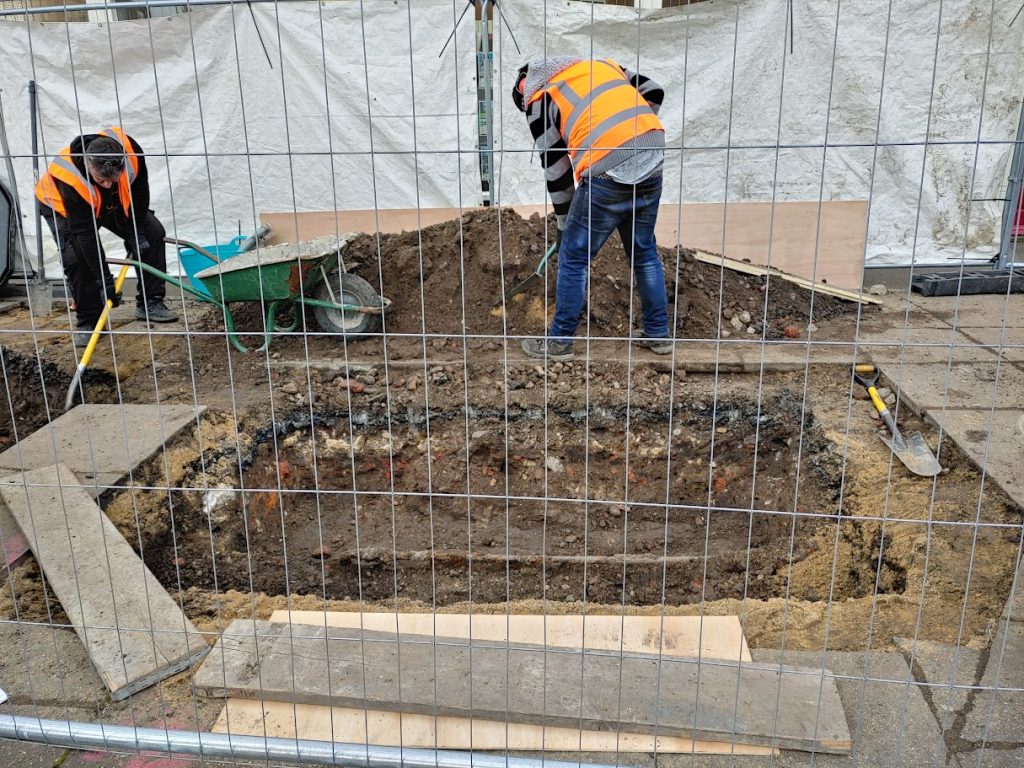
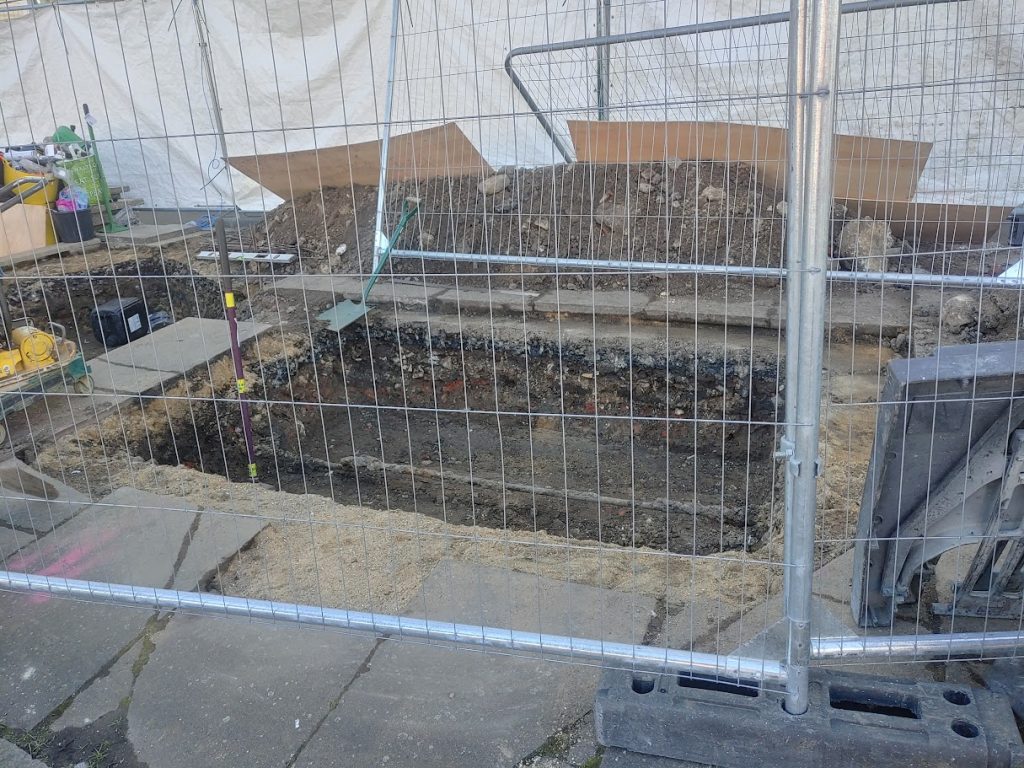
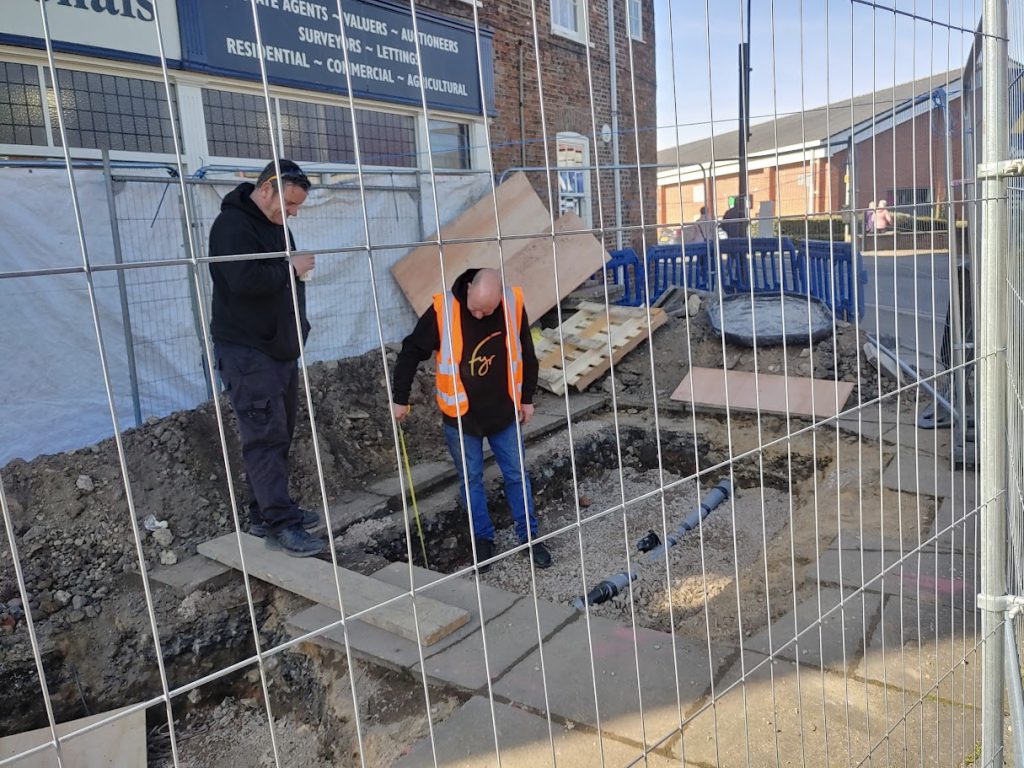
As it had been identified that there were utilities below ground, as the site was on what was the original Swan Street, the excavations had to be dug by hand. Then, due to the nature of the ground in Spalding, a foundation raft designed by South Lincs Consulting Ltd with a plinth was installed

Foundation excavation for cattle sculptures
Foundation trenches for cattle sculptures
Measuring the foundations for the cattle sculptures
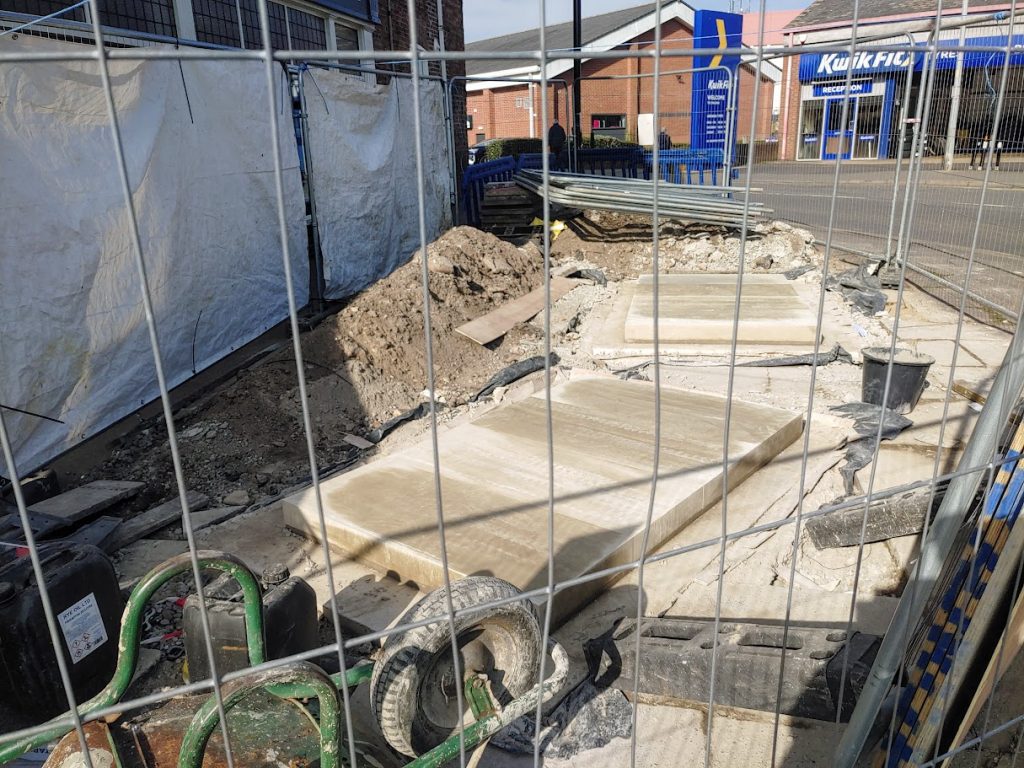
Completed rafts and plinths for the cattle sculptures

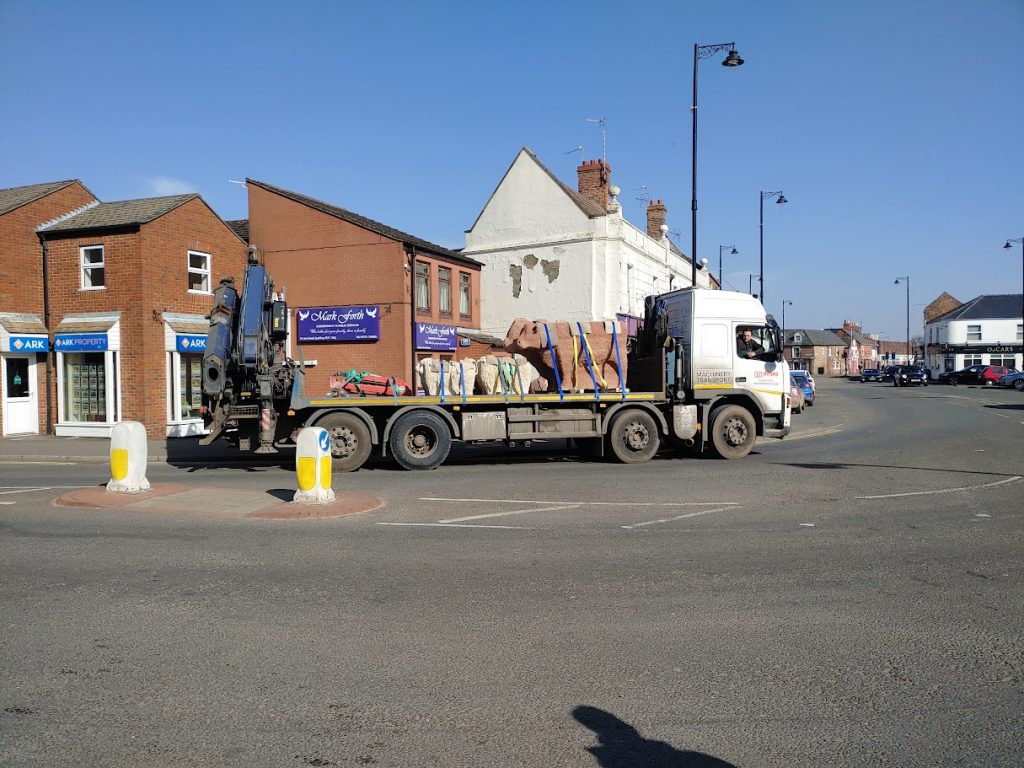
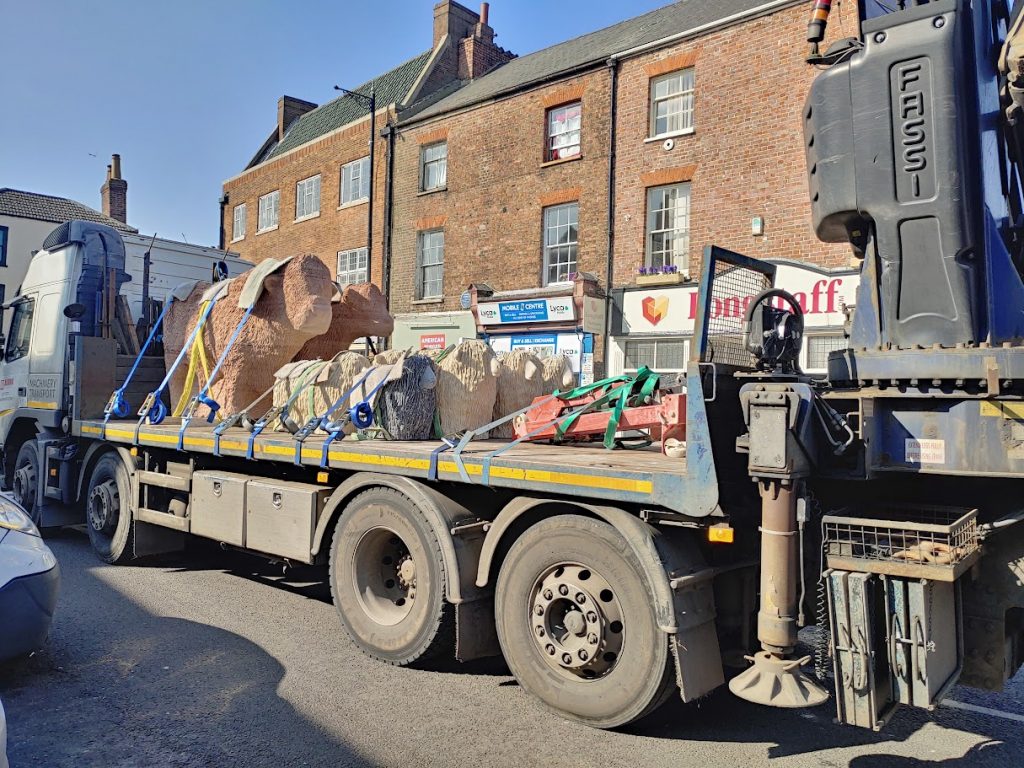
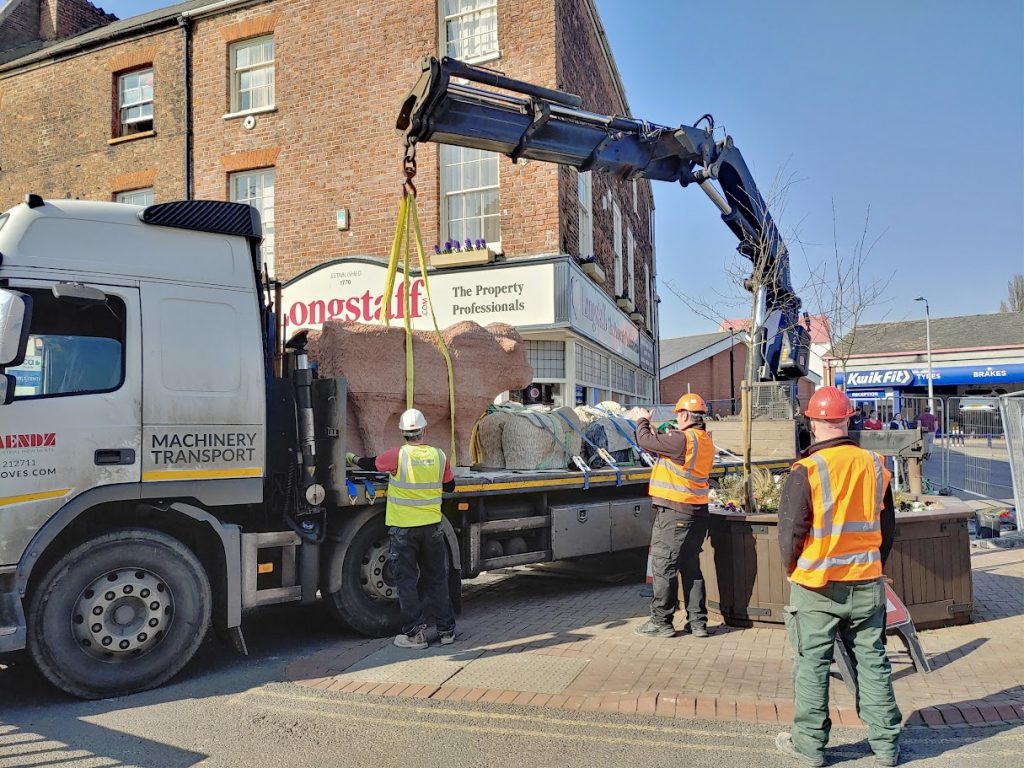
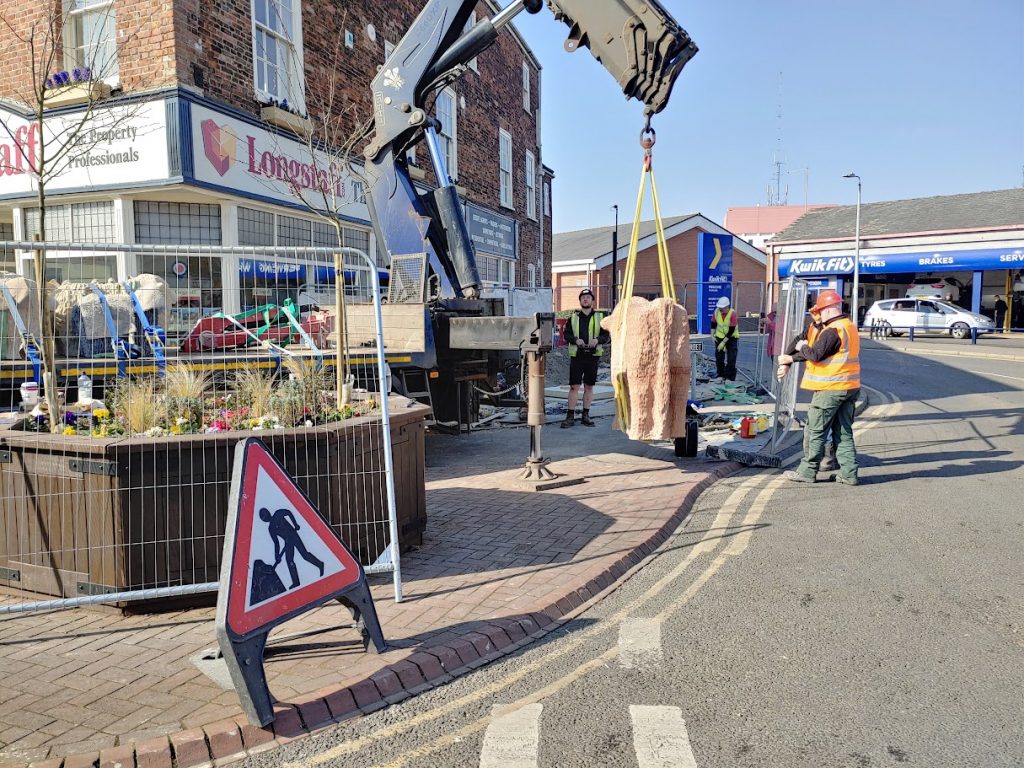
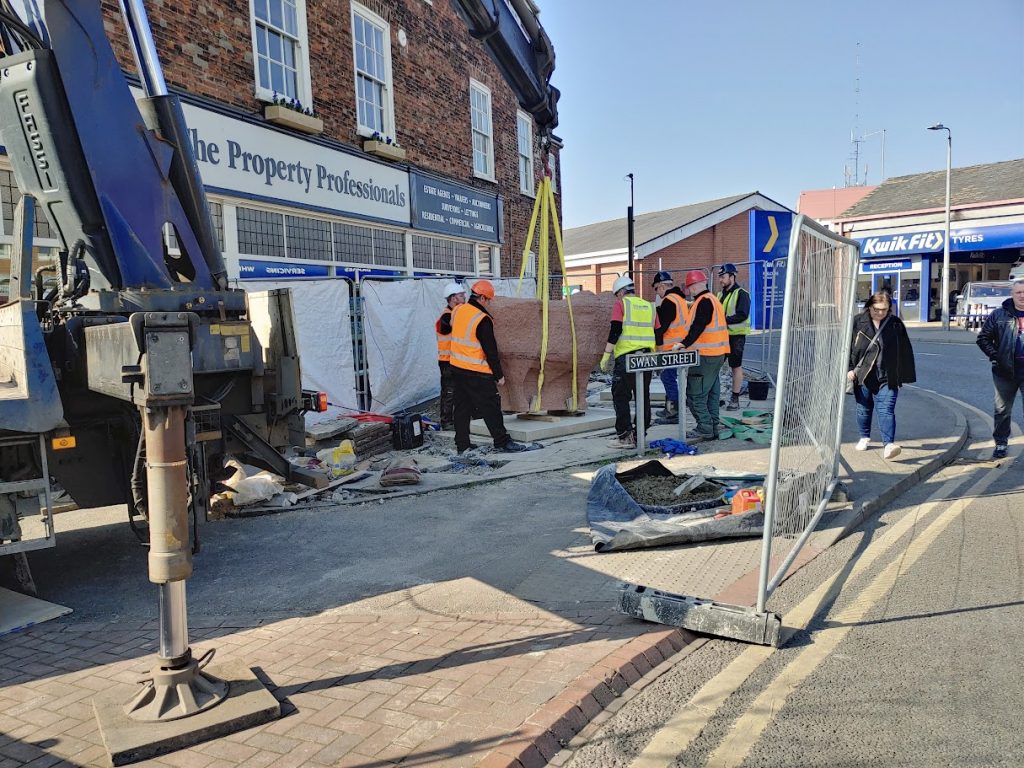
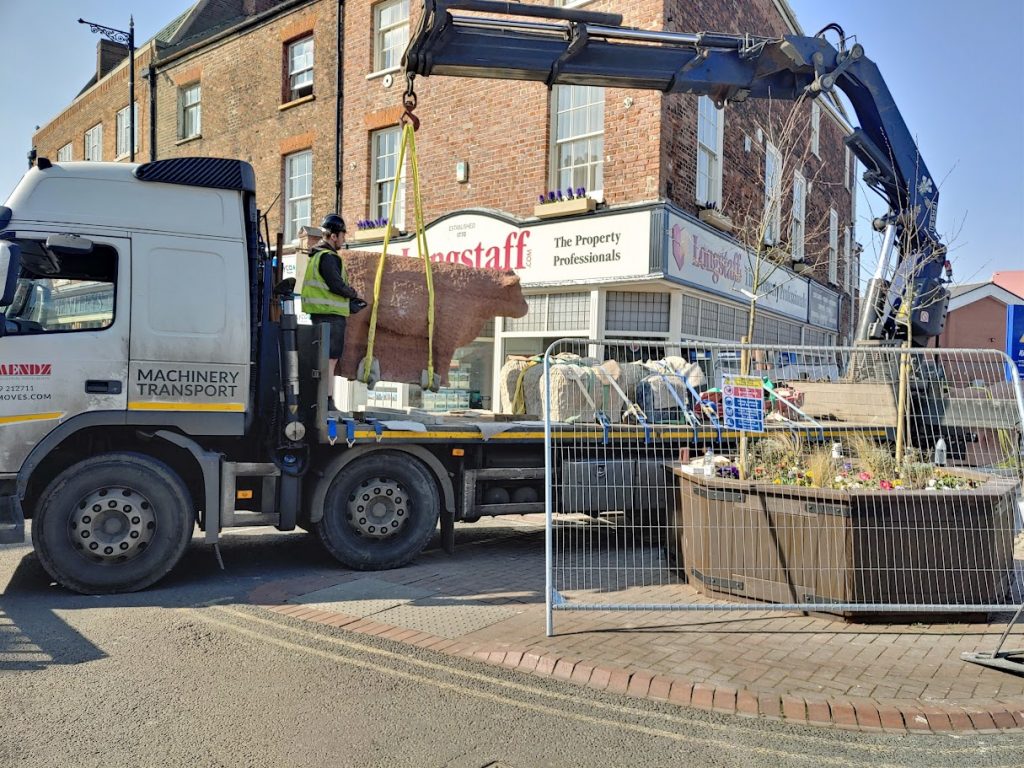
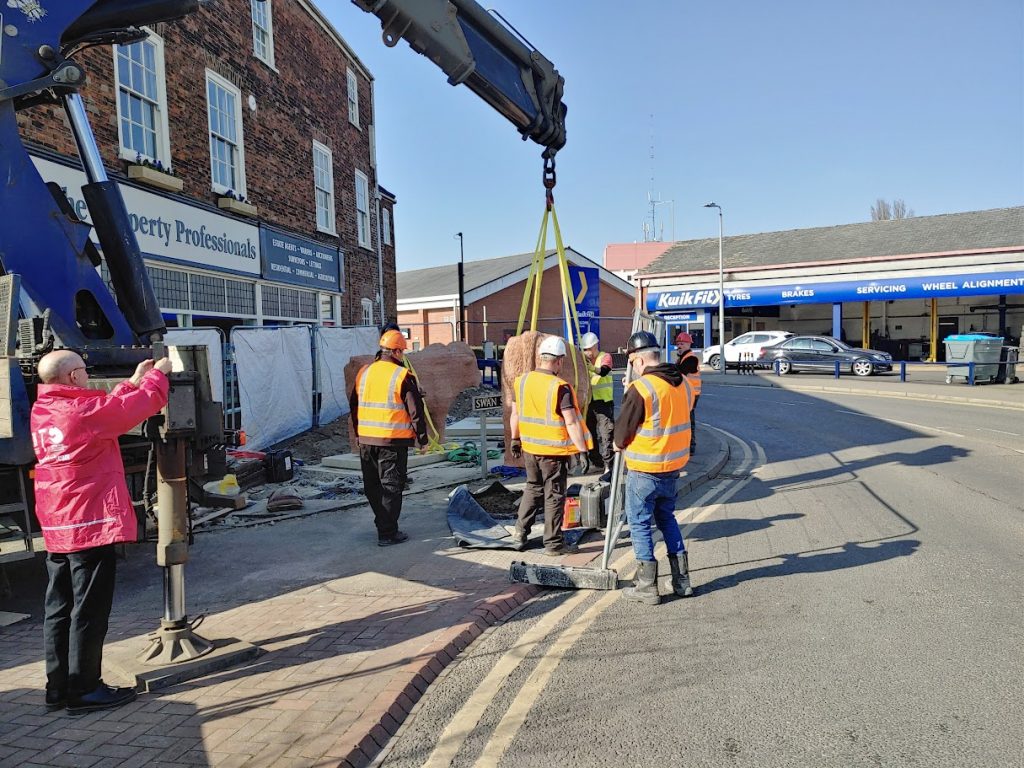
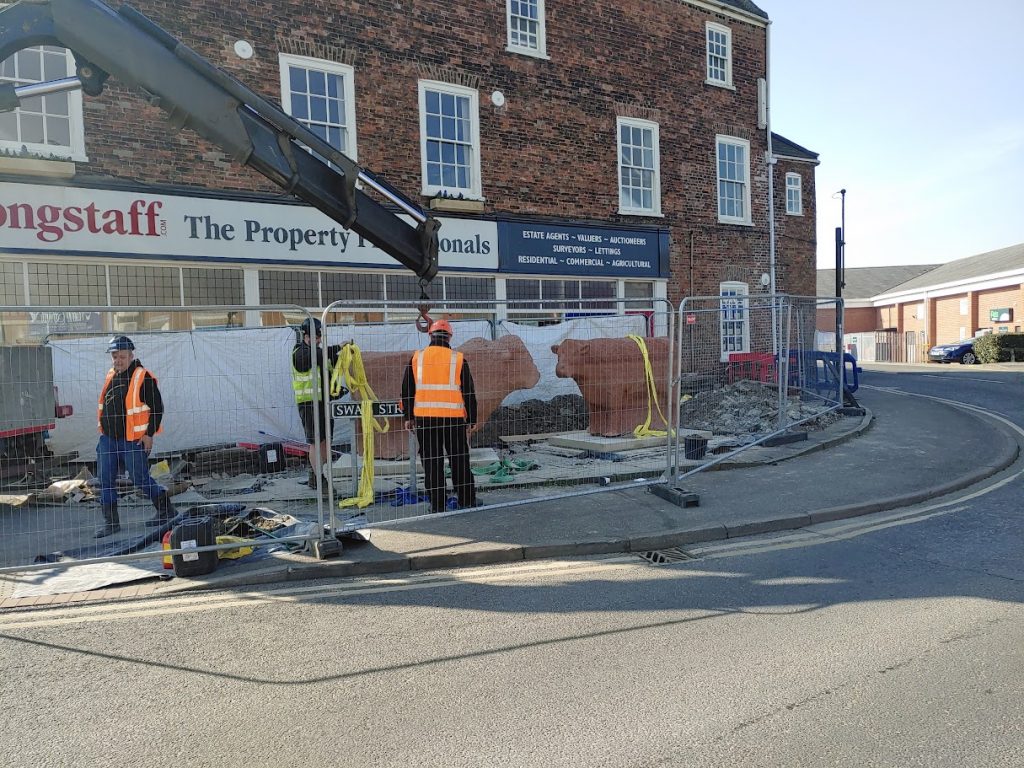
On Sunday 9 March 2025, the cattle were delivered to Spalding and lifted carefully into position, with members of Spalding & District Civic Society and team members from Transported on hand to direct traffic and pedestrians whilst the installation was taking place.

Cattle and Sheep sculptures arrive in Spalding
Cattle and Sheep sculptures on the low loader
Cattle sculptures on low loader
Graeme Mitcheson (white helmet) prepares the bull for moving into position
Bull sculpture being moved into place
Final positioning for the bull
The heifer sculpture being lifted towards its final destination
Negotiating the street sign
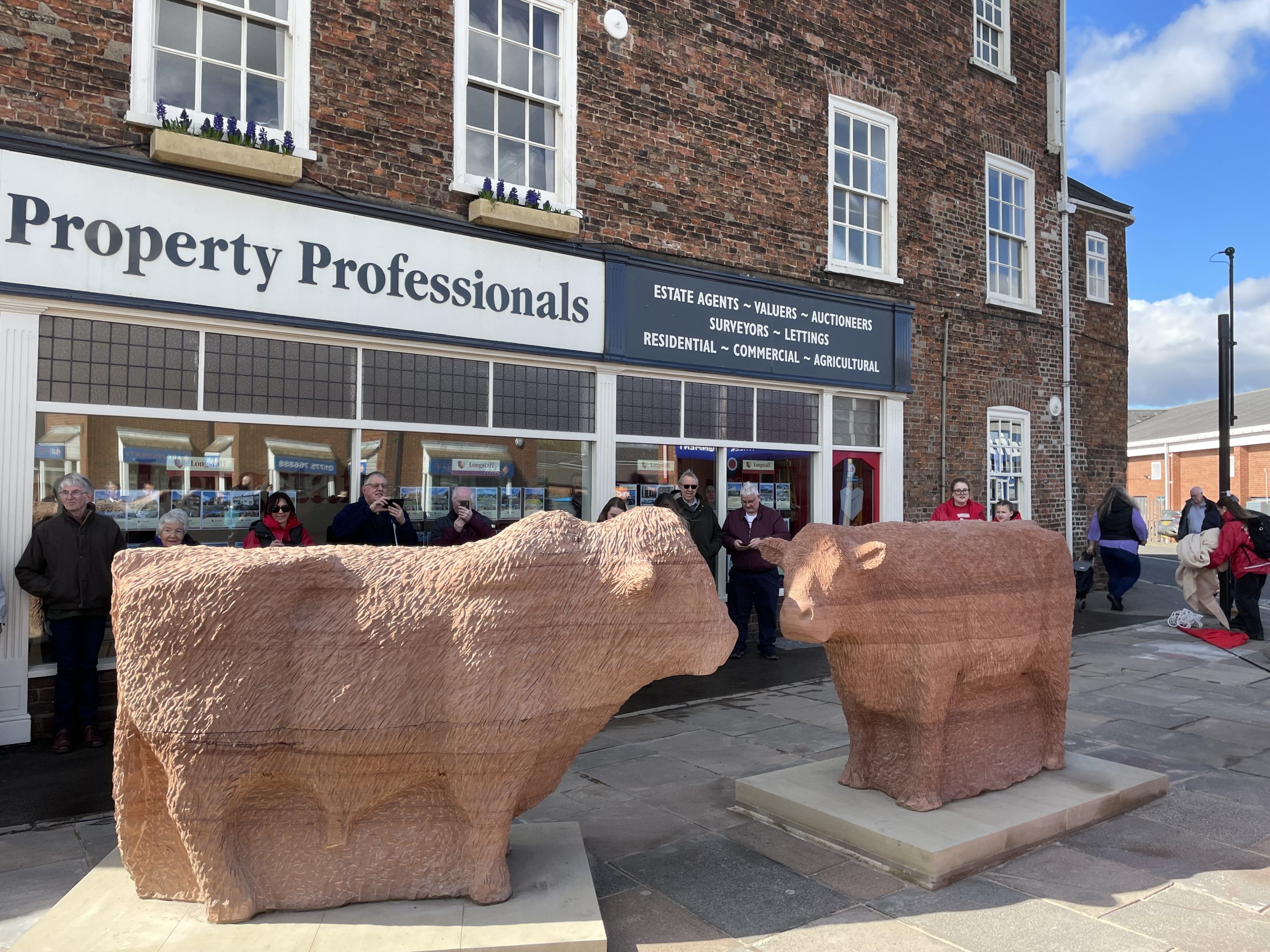
Bull & Heifer sculptures in position
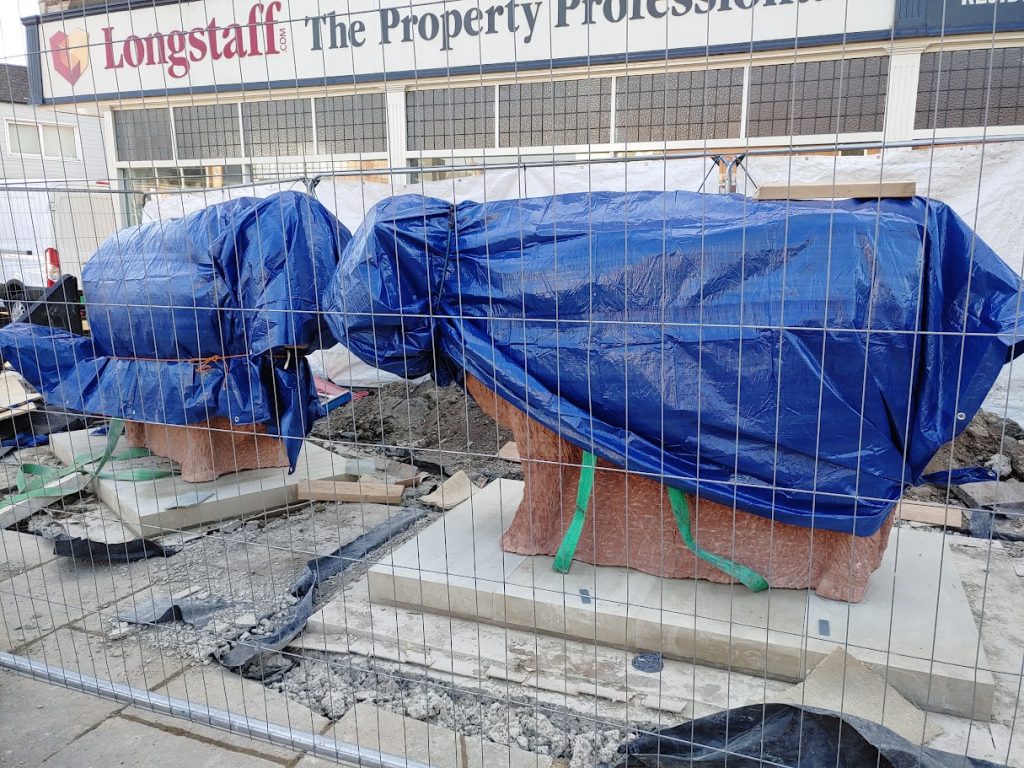
Bull & heifer sculptures secured for the unveiling

How they were unveiled

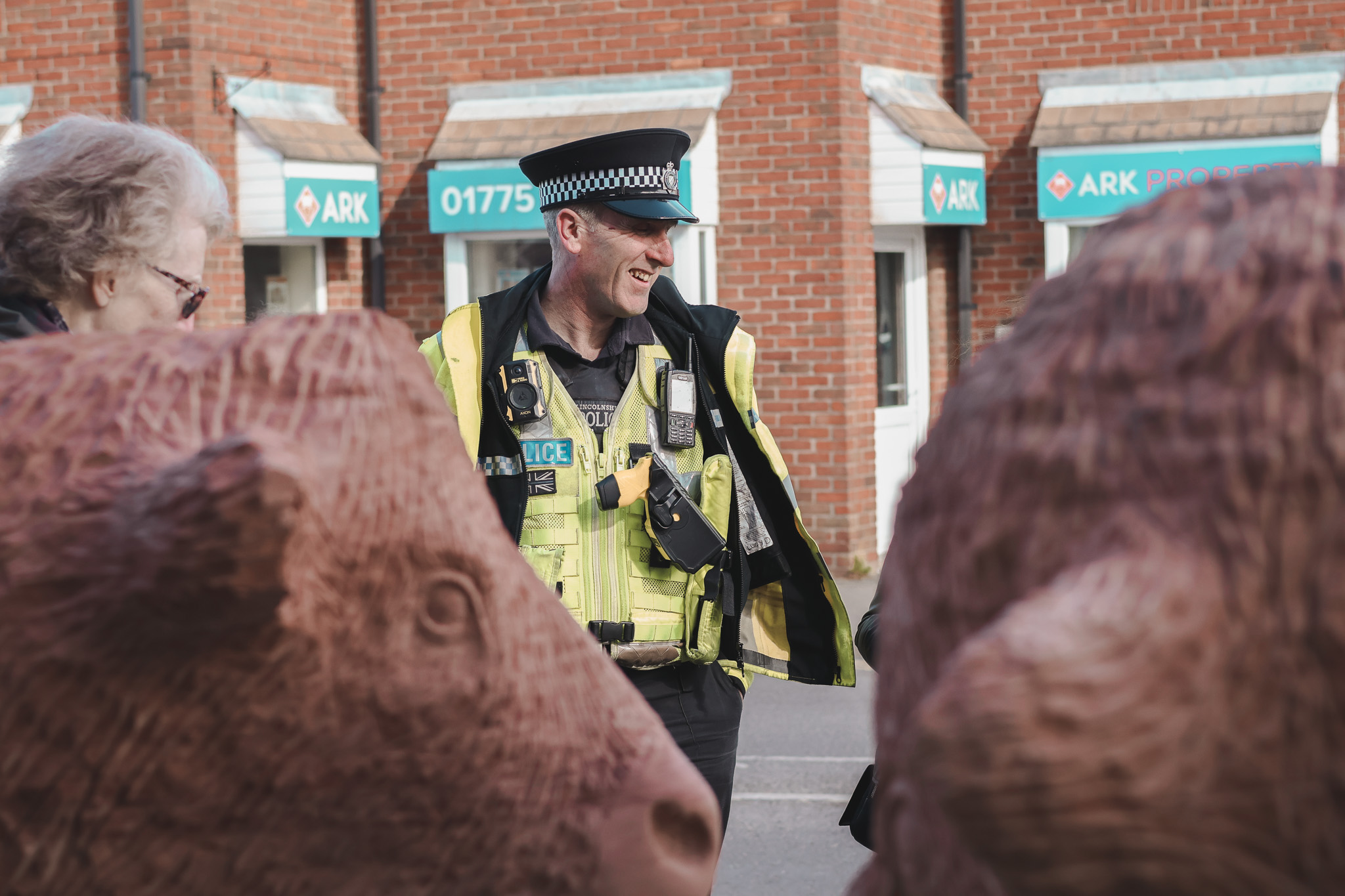
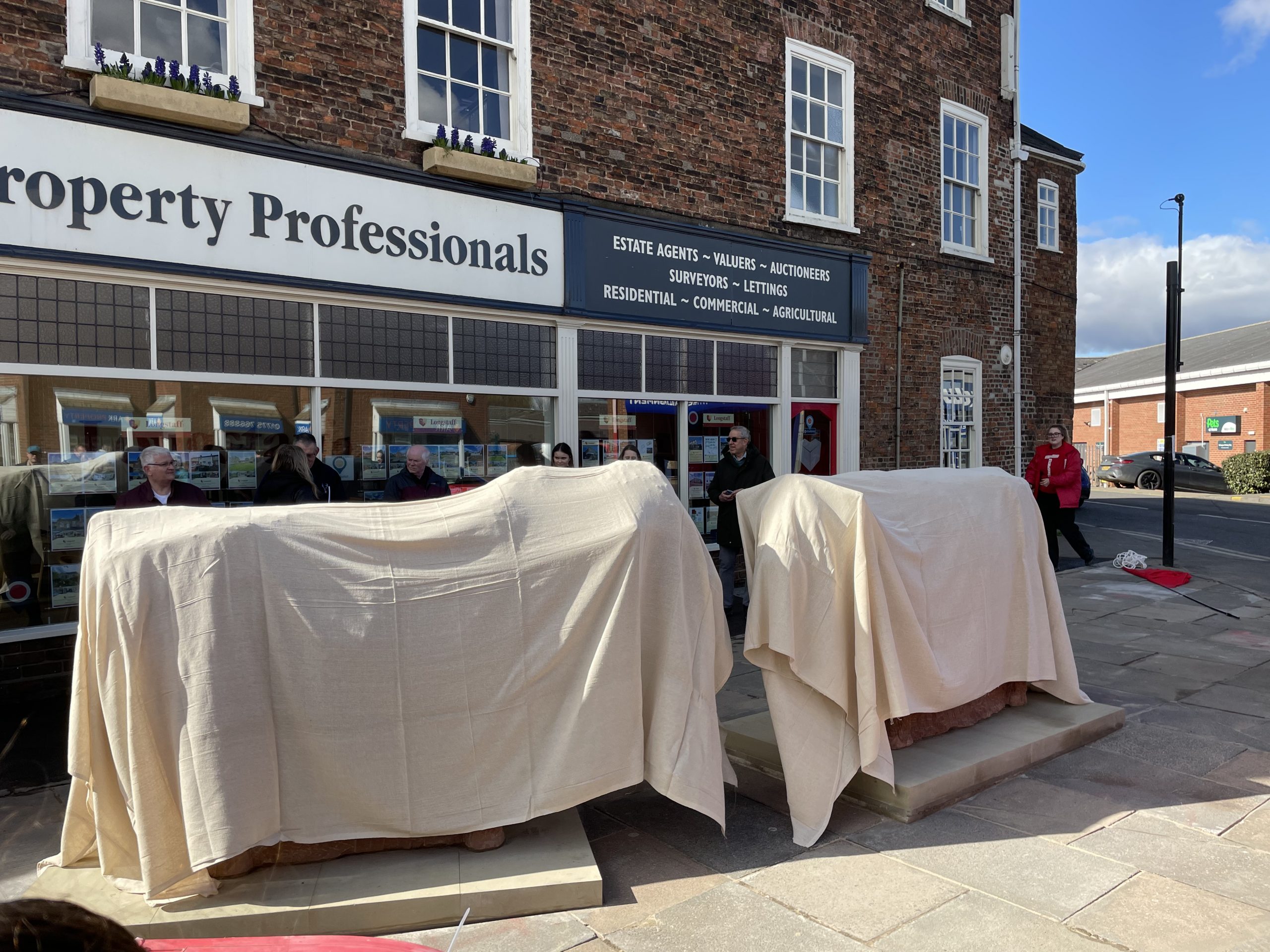
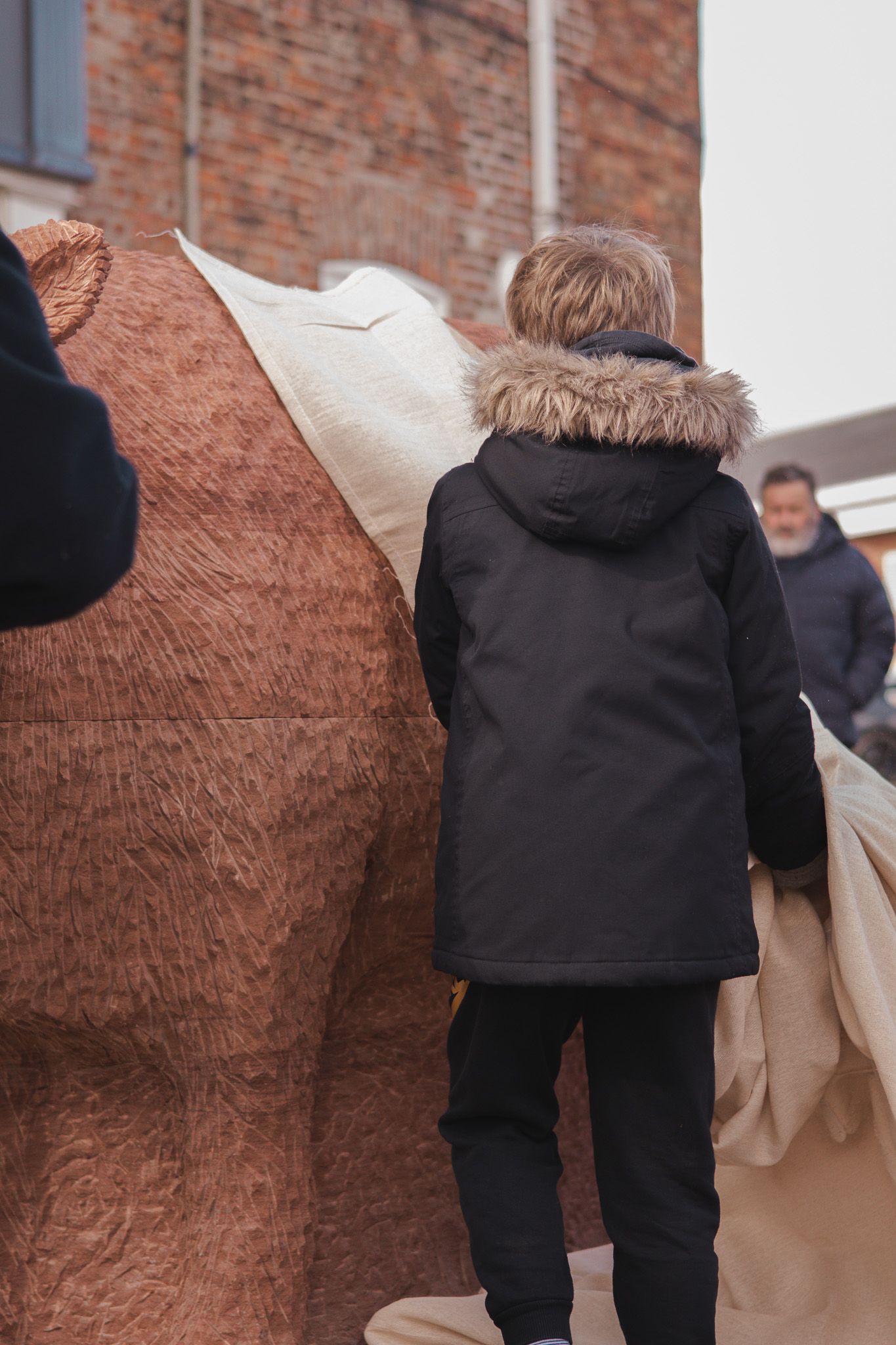
After the excavating , the foundations, the clutter removal and repaving, the flat-bed journey from Leicestershire, the aerial transfers and the installation, the day of the unveiling, Saturday 15th March 2025, had arrived.

In the final week, thanks to a Council magic wand and hard work from contractors beyond the call of duty, previous niggling obstructions just melted away. The last-minute possibility of disruption by vegan activists did not materialise and all went smoothly.

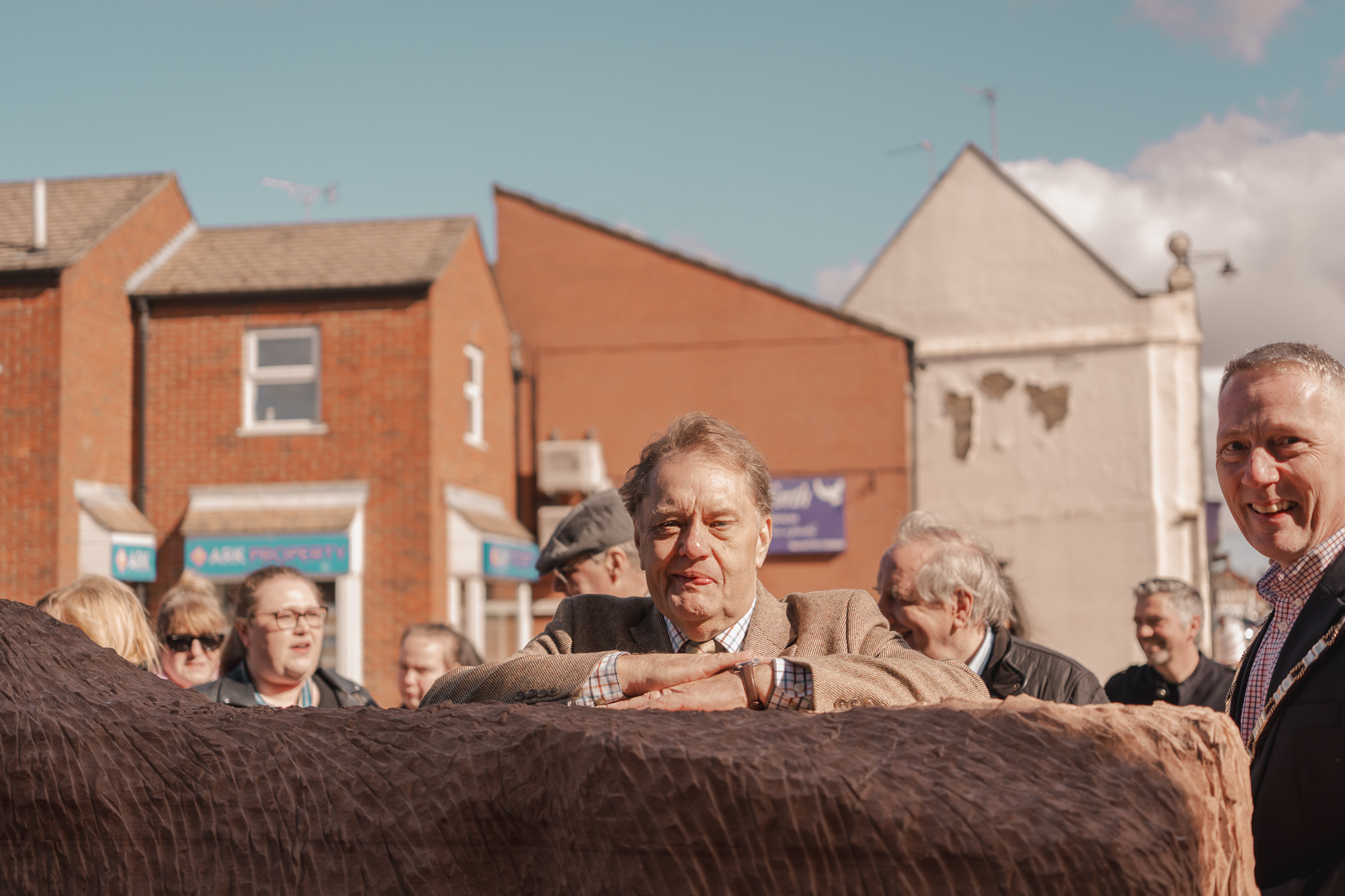
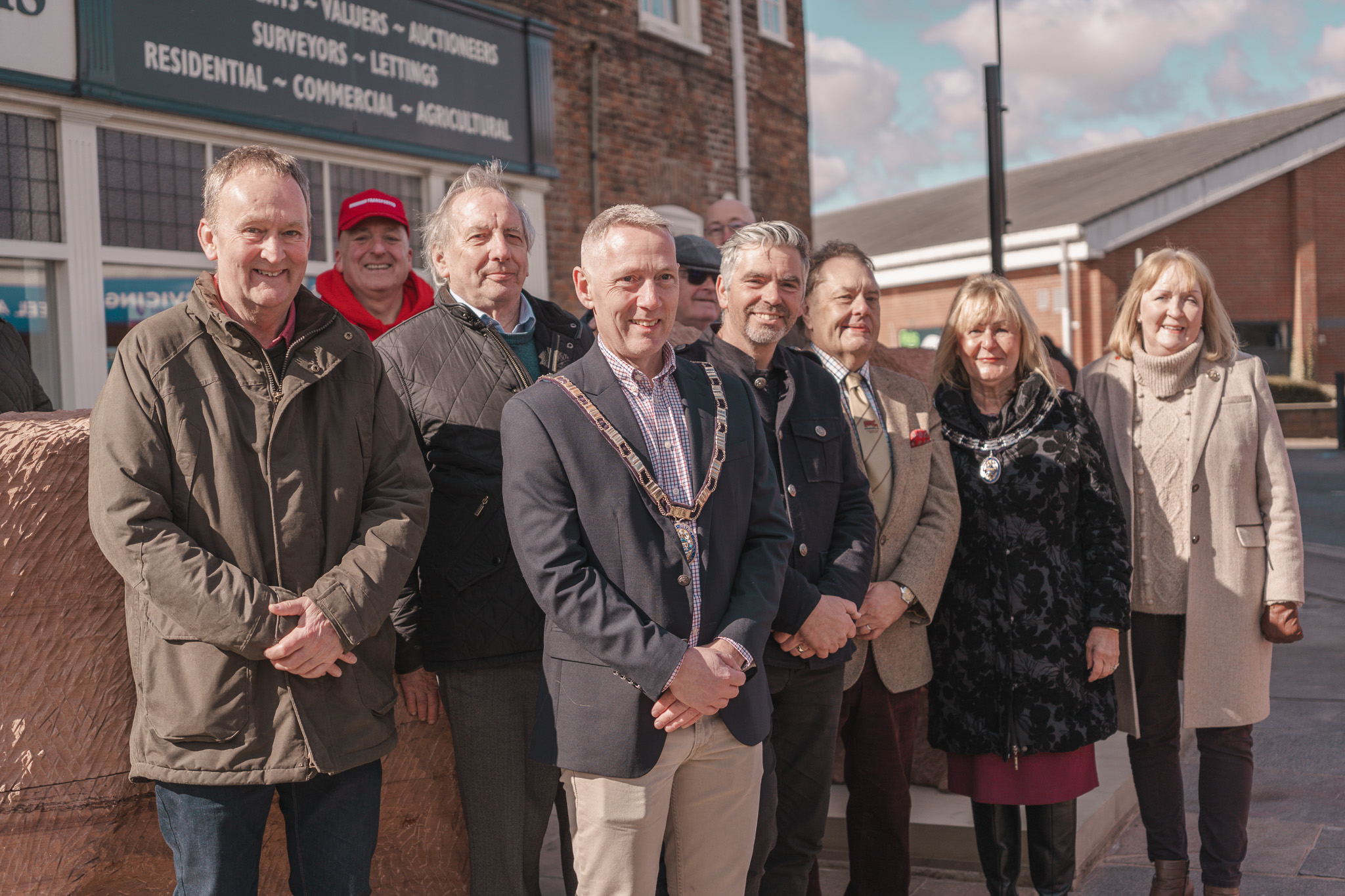
The ceremony took place in Hall Place, where the notables and the 100-odd crowd mingled in happy anticipation, the sun shone and the Spalding Folk Club played. The formal speeches were made by our Chair, John Bland, local MP Sir John Hayes and Katherine Bettinson, Vice-President of the Lincoln Red Cattle Society and the sculptor Graeme Mitcheson.

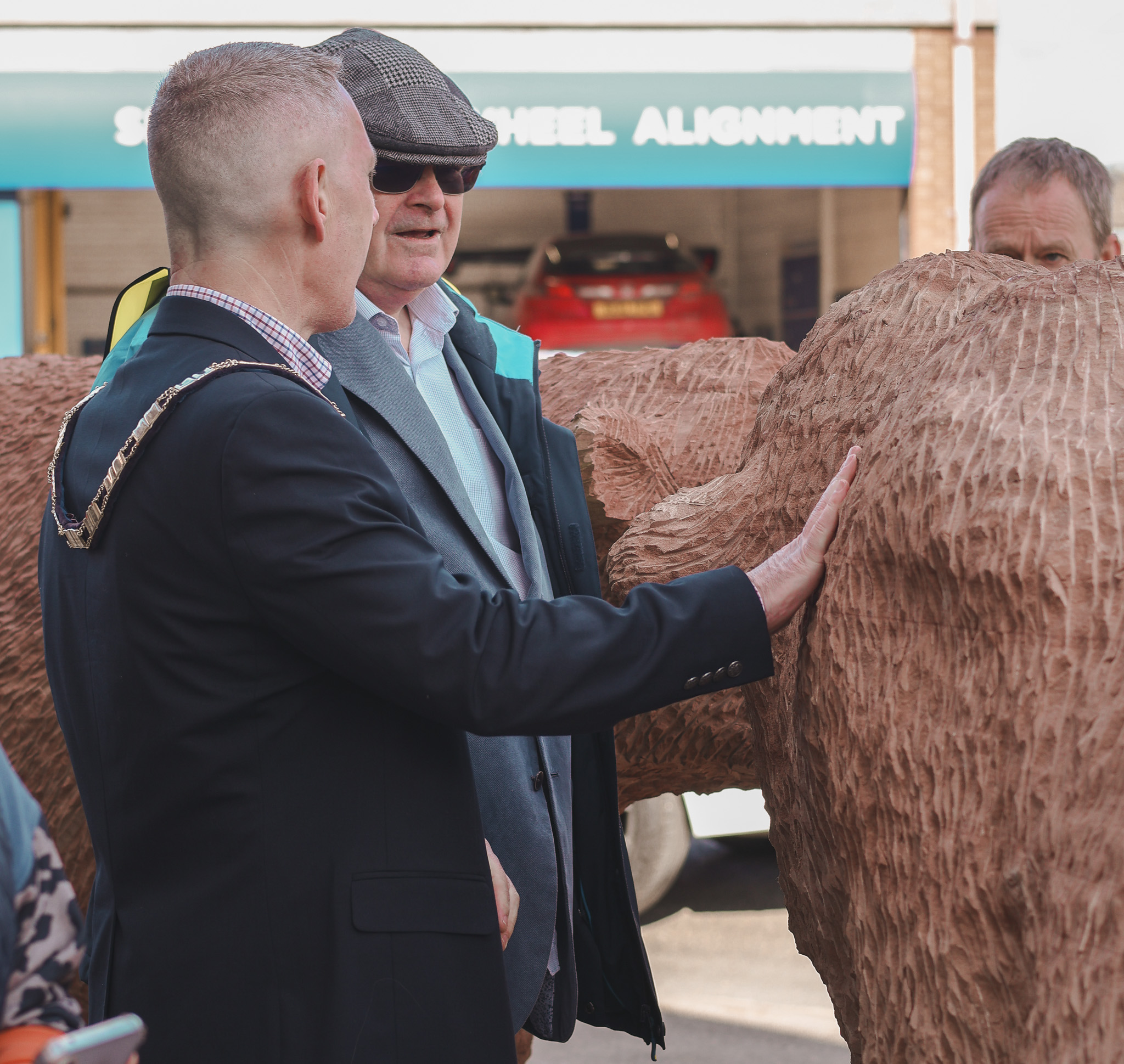
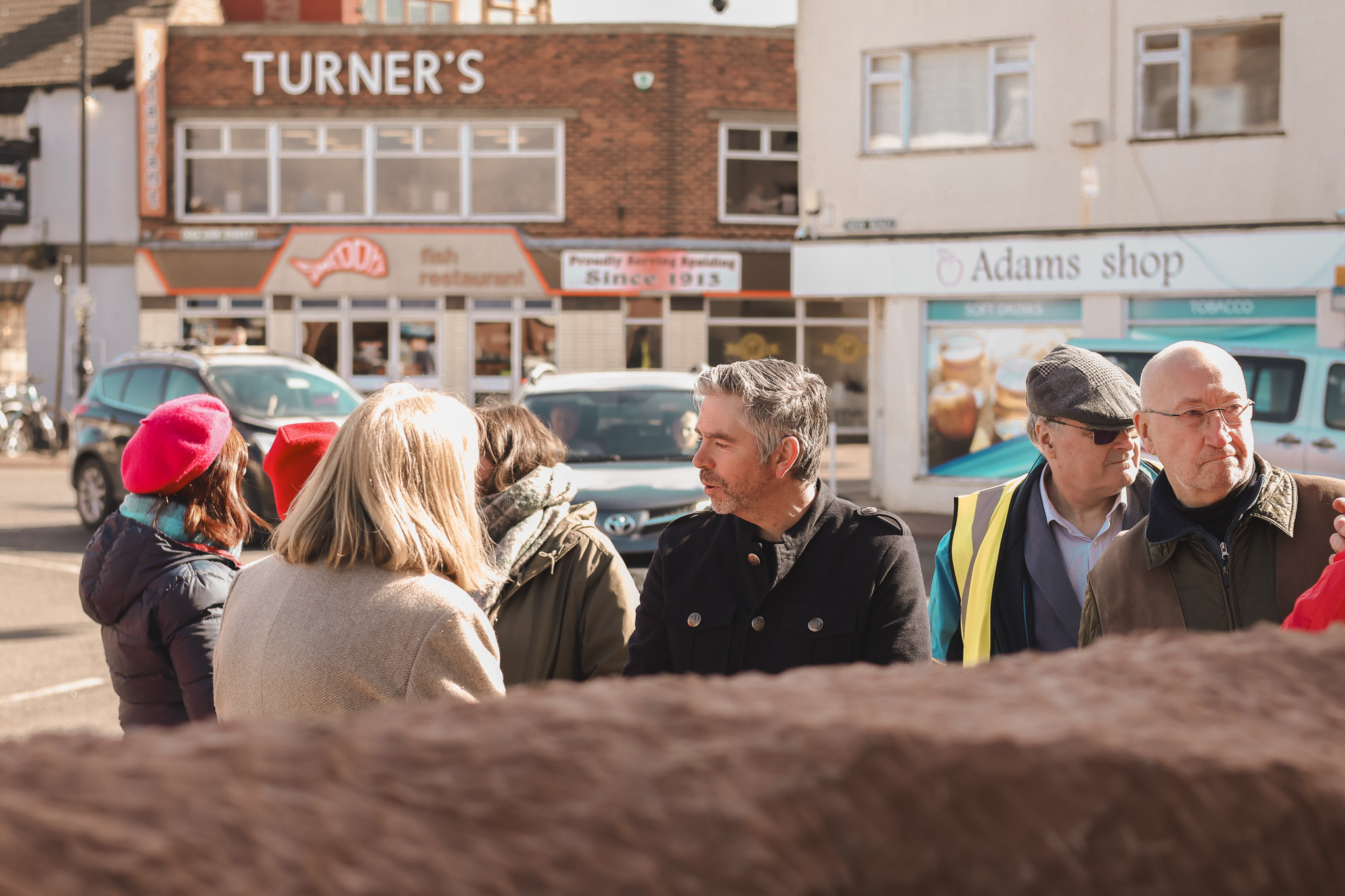
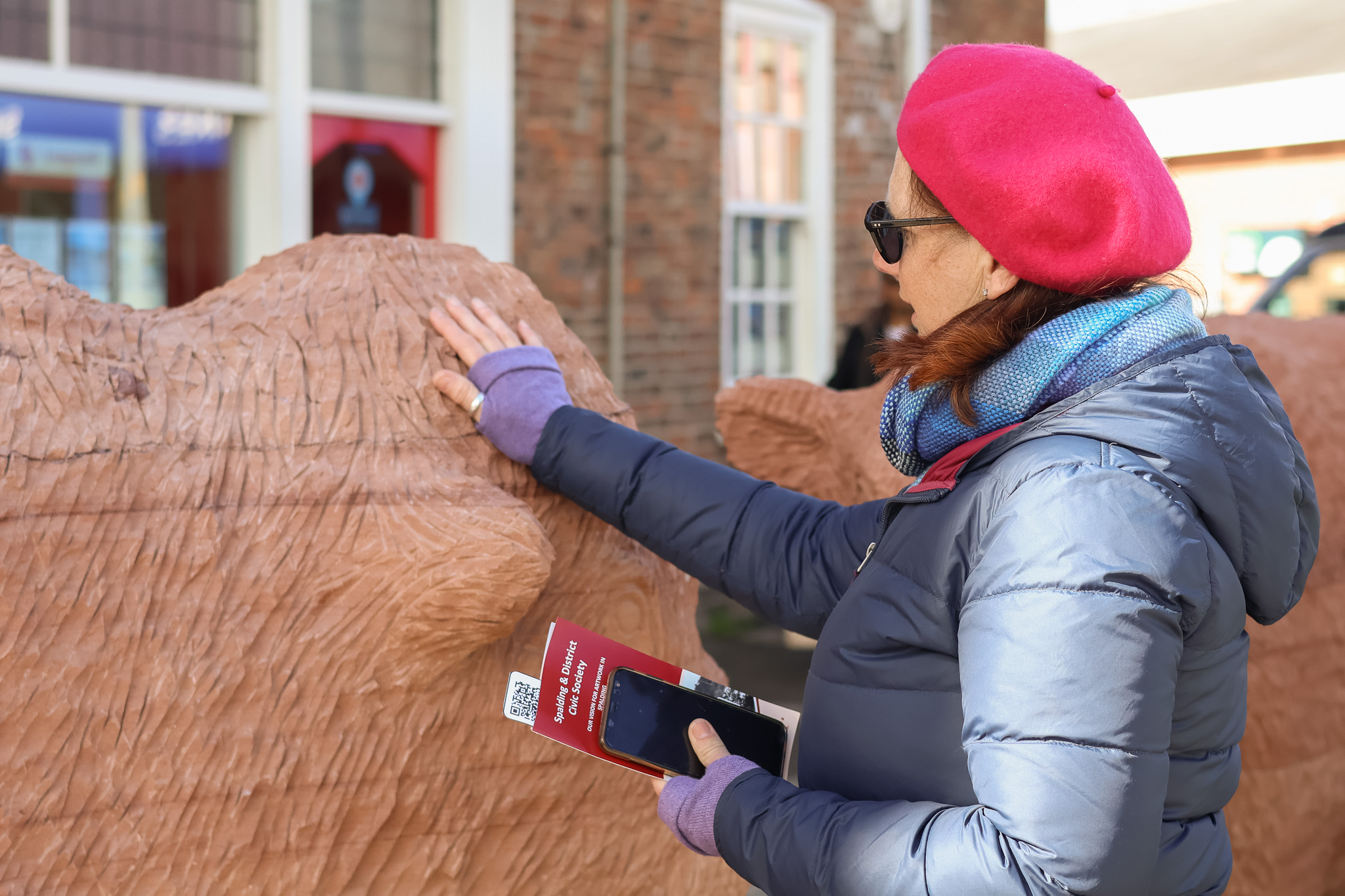
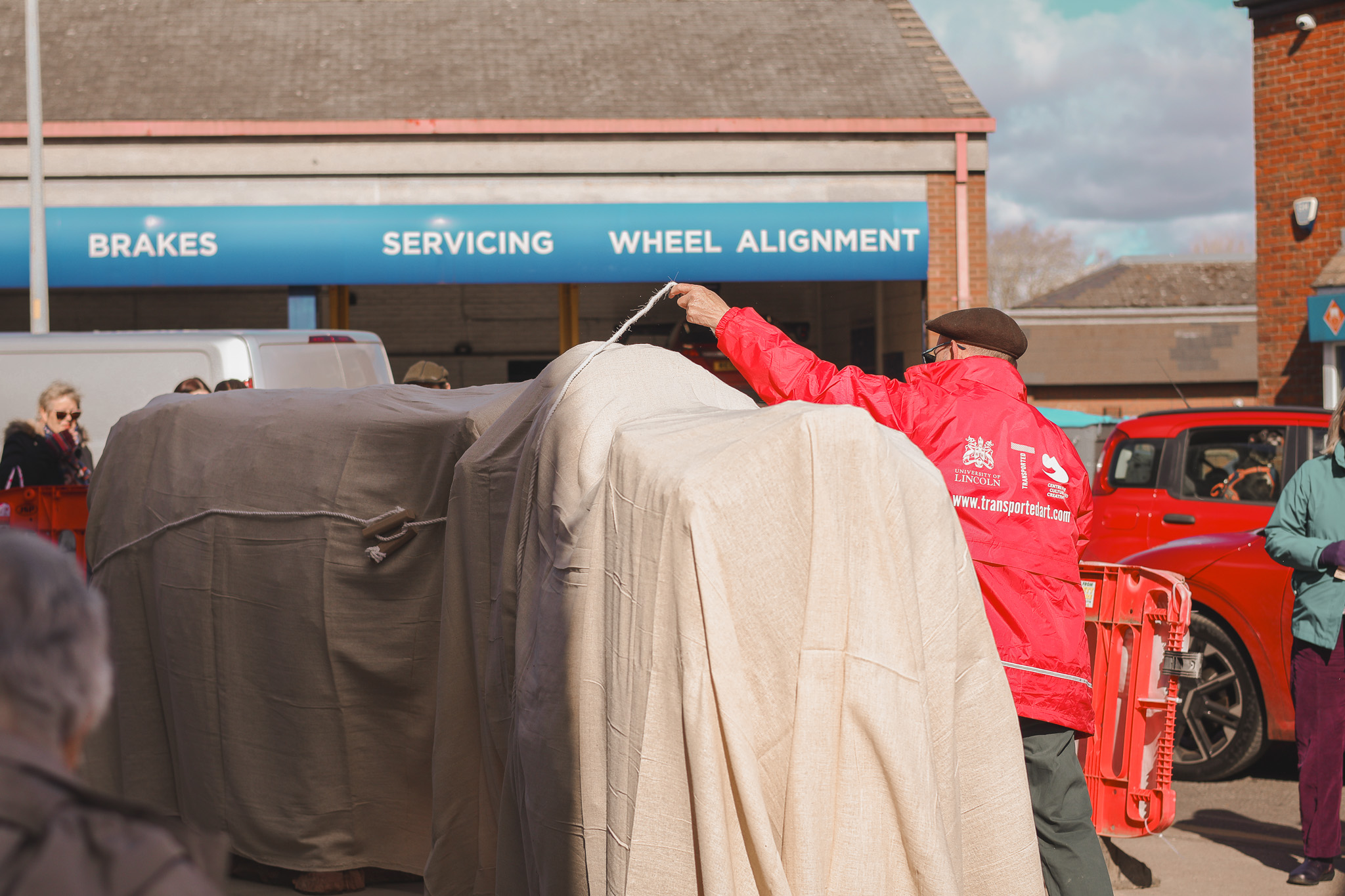
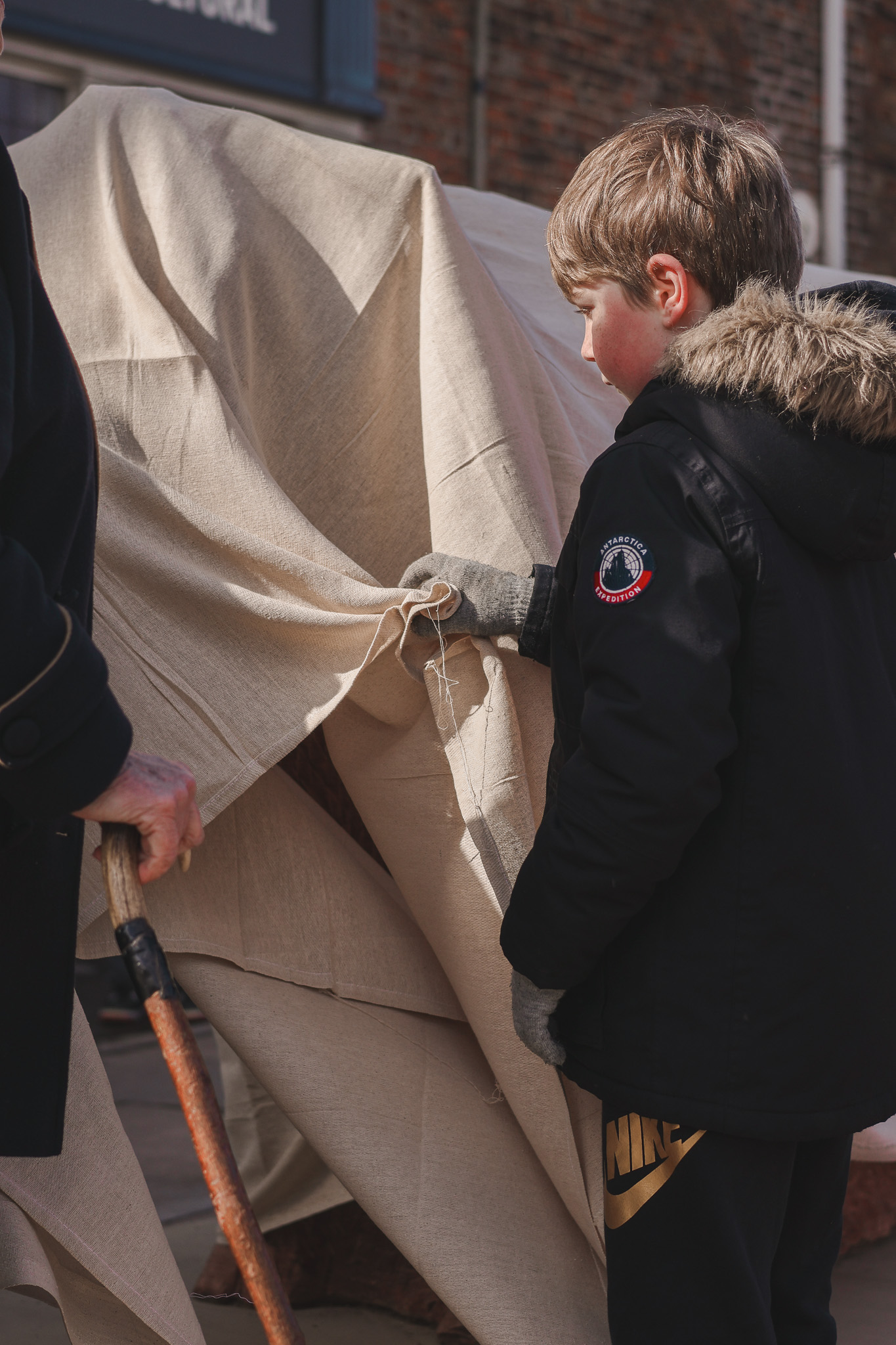
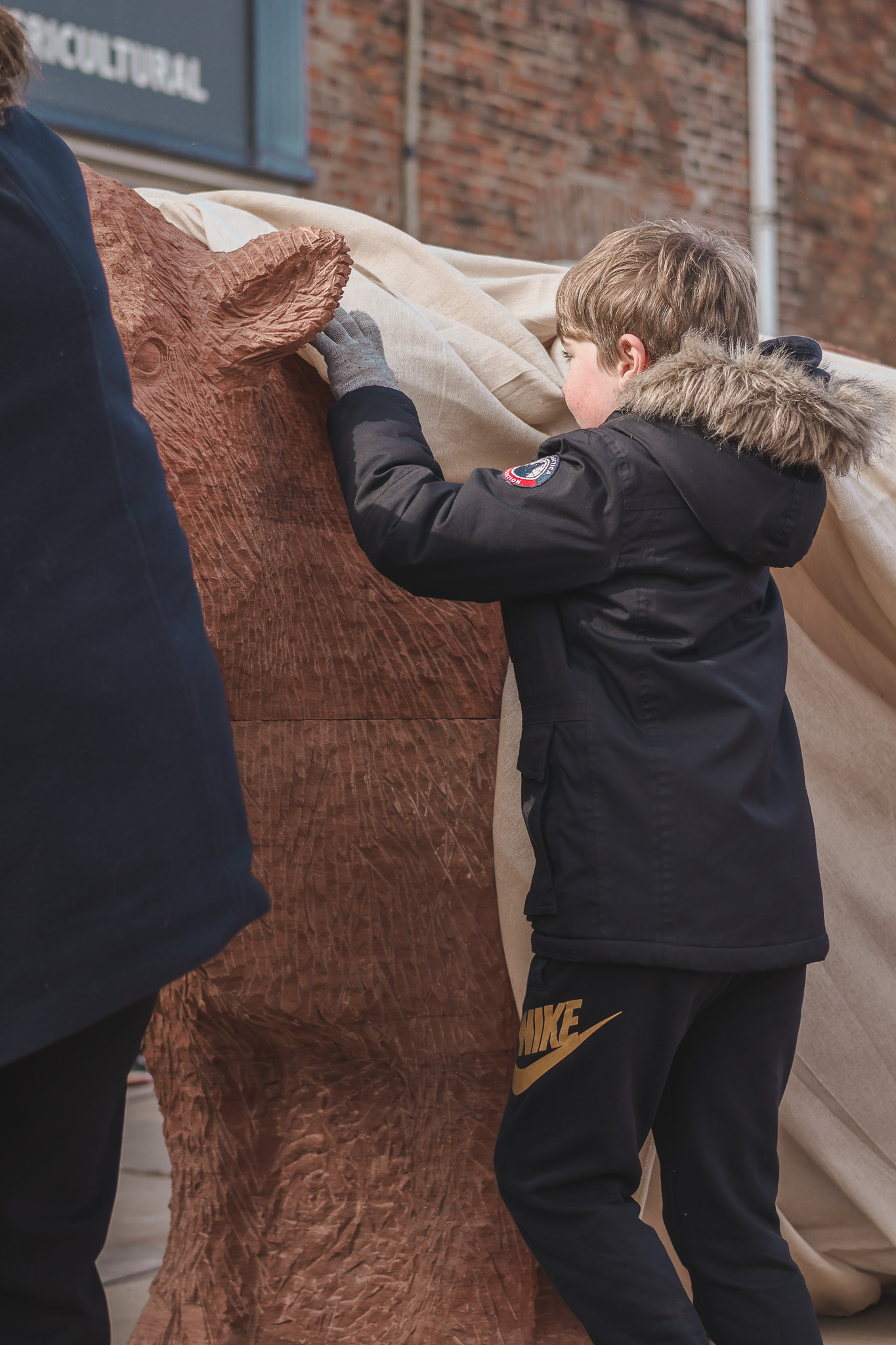
Both groups of sculptures were unveiled to spontaneous count-downs. Livestock had returned to the town centre.